
 •
Rating:
•
Rating:
THE REVIEW
"Let me see what others think about this atypical and peculiar album, let me take a quick look on debaser...D***, it's not there!" This was one of the many thoughts swirling in my head and it pushed me to write a review of an album that, although not an absolute masterpiece, truly deserves recognition. Atypical, indeed. Like the band that composed it and along with a few others (Voivod, Megadeth) managed to carve out a significant space and a unique style in thrash, a genre that, apart from these examples, presents countless pseudo-satanist bands that plagiarize each other and endlessly repeat with riffs always identical to themselves. The peculiarity of Waters' band lies in its deliberately progressive nature, in the use of triplets, numerous tempo changes, the overlaying of acoustic and distorted guitars, and (this is the fundamental feature of technical thrash) in the use of multiple riffs in the same verse...
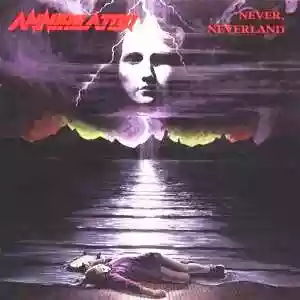
Moving on to the album, it's worth mentioning the progress made compared to the previous Alice in Hell. Besides the lineup change, there is a change in the mixing of the guitar sound, with a reduction in the level of overdrive in favor of a melodic exploration that will become a constant in future albums (see King of the Kill). The prologue "The Fun Palace" encapsulates all these characteristics. It opens with a very engaging octave riff, showing little thrash influence, especially in the very frequent tempo changes and in the embedding of riffs that seem to create an inescapable vortex...the effects of drugs, indeed, which the singer metaphorically compares to an inescapable funhouse... The track closes magnificently in fade-out and is followed by the track "Road to Ruin" which is already several notches below the first; the vocal performance is notable, venturing into pleasant dissonances, though musically it is quite stereotypical. "Sixes and Sevens" proceeds in a very similar way, martial in the chorus, and indeed suffers from the same flaws as its originality is close to 0. With "Stonewall" there finally comes a track with various hard rock and progressive influences, especially in the alternation between the verse and arpeggio, chords played first normally, then in palm mute...and a remarkable and touching text on the environmental disasters caused by man that backfire on himself "Stonewall-can't we see, we are our own worst enemy". The title track is a masterpiece...while continuing the saga begun with Alice (of psychopathic girls so to speak), the track dedicated to the true story of Claire (forced to live in an attic) shows itself to be vastly superior already in the opening riff with a series of power chords that will later be taken up by Dream Theater. Epic and moving, it continues with what seems like the tale of a storyteller masterfully supported by a couple of melodic riffs in the first part, which enter the metal hall of fame...and it's ultimately, a rare example of generic music without the label of a metal song and that's it. In simple terms, you may hate metal as much as you like, but you'll like this track nonetheless. "Imperilled Eyes" attempts an approach not far from the early tracks...more than anything else, it rises above their mediocre level due to a psychedelic search in the central part that culminates in a whirlwind of scales at extreme speed, yet the track is catchy. "Kraf Dinner" is the 4th and final artistic piece of the record; it plays with hardcore, extreme and ironic vocals, and amusing background voices...unique... The last 3 tracks are unfortunately filler. "Phantasmagoria" begins with a tedious endless guitar whirl, and the refrain succeeds in ruining it completely. For "Reduced to Ash" the same applies as Road to Ruin and the others; and "I'm in Command" tries to close, and it's notable, in Metal Militia style.
I apologize for using, perhaps abusing, some technical terms, but the author is a guitarist.
Loading comments slowly
Summary by Bot
Annihilator's Never, Neverland is a distinctive thrash metal album that breaks typical genre clichés through progressive riffs and varied tempo changes. Despite not being a flawless masterpiece, it shows clear evolution from the band's previous work, with standout tracks like the title song delivering epic storytelling. The album combines melody and technical skill with occasional fillers toward the end.Tracklist Lyrics Videos
Annihilator
Annihilator are a Canadian thrash/technical thrash metal band strongly associated with guitarist and main songwriter Jeff Waters. Reviews emphasize their influential early albums (Alice in Hell, Never, Neverland), frequent lineup changes, stylistic experimentation, and recurring “return to form” moments in later releases.14 Reviews
