
 •
Rating:
•
Rating:
THE REVIEW
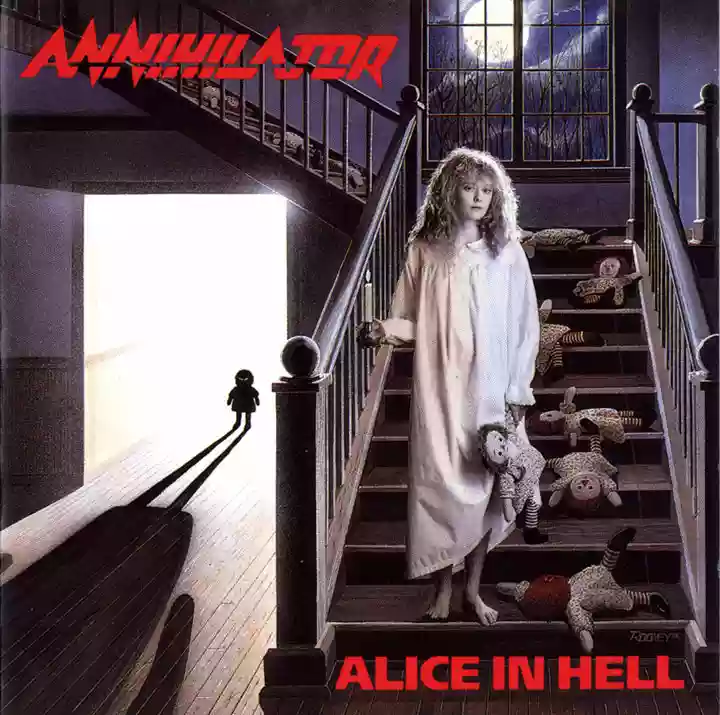
If there's something that, in my opinion, makes music an art, it's expressiveness. I'm referring to the moment when, reading and interpreting the lyrics of a song, you realize that the melody had already suggested the topic to you. This is what "Alice In Hell" is, this is who Jeff Waters is: the album is art, the composer (by syllogism) is an artist, a genius.
From the Opener Track, you can already understand what kind of listening experience you are in for. "Crystal Ann" is pure poetry, of a refinement that is no longer of this world. One cannot help but be enchanted by its melody, which truly holds the value of a crystal. What this gem manages to convey can only be compared to a piece of classical music (though, of course, we're talking about a completely different genre). And then we plunge into the horror of "Alison Hell". The essence of the product is given by the first bass notes, which immediately catapult us close to Alison and the nightmare she lives. Here is the pinnacle of expressiveness, in the song that best identifies Jeff Waters's greatness, which will remain his best composition ever (I write this considering the band's genre, otherwise the crown would go to "Crystal Ann").
Then we move on to "WTYD", where Jeff delves into the theme of death. I must highlight the beauty of the piece's central part, resembling a mix between classical and a composition by Goblin. With "Wicked Mystic" and "Burns Like A Buzzsaw Blade", the tone drops a bit (especially with the latter), but objectively, we are still faced with two good tracks. We return to the macabre with "Word Salad", and it couldn't be otherwise when the topic is lobotomy. And here, Waters also showcases all his guitar techniques, alongside his usual compositional greatness. What to say about "Schizos"? The song is all in the title. Moreover, it represents a nice pounding of healthy thrash. A track of violence, filled with technique and sublime anti-harmony. Before Annihilator, Edgar Allan Poe was also an inspiration for Iron Maiden, who composed "Murders In The Rue Morgue" from the story by the writer. Jeff presents us with "Ligeia" instead. One must recognize that, for the theme addressed, the work of the Annihilator's leader is quite superior to what Iron did. Here we are at the conclusion, with "Human Insecticide" and its viciousness, the same one that has accompanied us so far (even though the concluding track doesn't quite measure up to the others). Another good piece, though not deserving of high praises.
What I have reported in this review of mine is undoubtedly loaded with subjectivity, but I don't think one can speak negatively of "Alice in Hell". As we know, popularity has never been in the cards for Annihilator; the band has always remained quite in the shadows, and in 1989 (the year of the CD's release), another masterpiece came out by a group that had already attracted millions of fans: I'm referring to "Master of Puppets" by Metallica. Perhaps the reason for the little fame Annihilator will enjoy is due to the fact that this band emerged late, while Metallica and Slayer had already conquered the hearts of thrashers. However, I challenge anyone not to recognize the magnificence of Waters's work.
Loading comments slowly
Summary by Bot
This review celebrates Annihilator's 1989 album Alice in Hell as a true work of art, praising Jeff Waters' expressive compositions and guitar skills. Key tracks like 'Crystal Ann' and 'Alison Hell' are highlighted for their poetic and horror-inspired qualities. Despite its brilliance, the album remained underappreciated compared to contemporaries like Metallica. Overall, it is recognized as a thrash metal masterpiece rich with technical skill and emotional depth.Tracklist Lyrics Videos
Annihilator
Annihilator are a Canadian thrash/technical thrash metal band strongly associated with guitarist and main songwriter Jeff Waters. Reviews emphasize their influential early albums (Alice in Hell, Never, Neverland), frequent lineup changes, stylistic experimentation, and recurring “return to form” moments in later releases.14 Reviews
Other reviews
By So che?
From the first song, you understand why Jeff Waters is considered a great.
Without a doubt, this was the best lineup Waters ever had.
