
 •
Rating:
•
Rating:
THE REVIEW
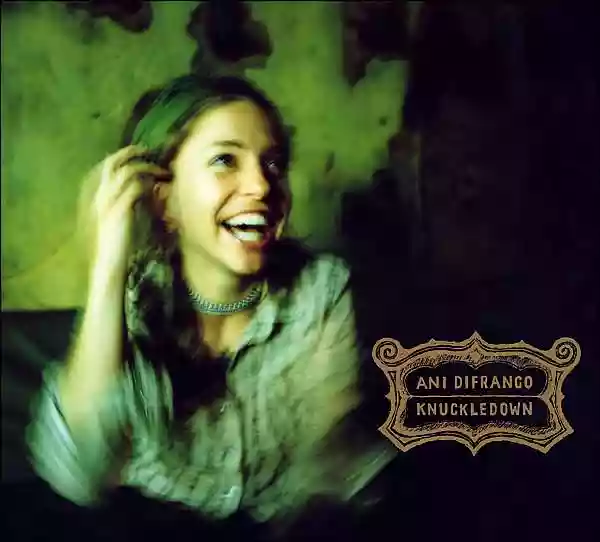
"Knuckle Down" ('05) should be included in that "new course" that characterized the discography of the "little (punk) folksinger" from Buffalo after the separation from the band that had accompanied her up to the good (but, in my opinion, not exceptional) "Evolve" of a couple of years prior. A new course in some ways more intimate and essential, made of calm and nuanced atmospheres, which, on the one hand, remains an orphan of those funky-soul turns that had characterized some of the previous productions, on the other, enhances even more that unmistakable combination of guitar and voice that brought success to the young singer-songwriter.
Mind you: neither "Knuckle Down" is an entirely acoustic album (given the contribution of Tony Sherr on electric guitars), nor does Di Franco completely give up the taste and touch of other musicians (an obligatory mention for drummer/percussionist Jay Bellerose). It is precisely in this context, indeed, that the fundamental contribution of Todd Sickafoose's double bass emerges, a "presence" often imperceptible, willing to remain most of the time in the background of the score, yet an indispensable counterpart to Di Franco's (almost) guitar monologues. What changes is rather the very "dimension" of the album, focused more on the warmth of compositions with an apparently low profile (but rich in feeling), than on the groove of the rhythms or the richness of the arrangements.
This gives birth to music that seems made to be leafed through like a photo album, songs like snapshots of emotions, moods, and memories. Sometimes just a few notes, whispered arpeggios, brushes caressing the snare drum, and a violin (the excellent Andrew Bird) on which to regulate the breath: notes written on a paper airplane to be (in) followed with the eyes, as it is propelled by the wind ("Studying Stones"). Notes forcefully torn from the belly of a soundbox, while a distant piano, almost aside, insists on wanting to dance ("Callous"), or a timid dripping of harmonics that fill the silence ("Parameters"). But there's also time to be drawn into more bluesy episodes ("Modulation", "Seeing Eye Dog", "Minerva") or frenetic ones (especially the opener "Knuckle Down", with that stuttering, mistreated, and slapped guitar, as if it were a percussive instrument), or to gather some of the joy that pervades the more sunny episodes ("Sunday Morning").
But, even more than the music, it is Ani's own voice that turns out evocative and engaging. Versatile to the point of feeling at ease not only in the intimate pathos of the recitative "Parameters", but also in the resentful sarcasm of "Manhole" ("But you can't fool the queen, baby Cuz I married the king"), truly capable of making us involved spectators of stories and fragments of life, now painful and suffered, made of misunderstandings and cynicism, ("Callous"), now "warm" and welcoming, imbued with the serene nostalgia of a child's memories, lost on the road between school and church ("Paradigm"). A voice that knows how to vibrate and hypnotize, like the flame of a candle that warms without burning. It illuminates just enough to look in the mirror, but with kindness, keeping the wrinkles in the shadows.
Loading comments slowly
Summary by Bot
Knuckle Down marks a refined evolution in Ani DiFranco's discography, featuring calmer, intimate, and nuanced folk rock. The album emphasizes warm and evocative compositions over rhythmic complexity, enriched by contributions from notable musicians like Todd Sickafoose and Andrew Bird. Ani's versatile and expressive vocals enhance the emotional impact, delivering stories filled with nostalgia, sarcasm, and warmth.Tracklist Lyrics Videos
Ani DiFranco
Ani DiFranco (born 1970, Buffalo, New York) is an American singer‑songwriter and guitarist known for her percussive playing, incisive lyrics, and independent ethos. She founded Righteous Babe Records and has released dozens of albums spanning folk, punk‑folk, and jazz‑tinged textures.05 Reviews
