
 •
Rating:
•
Rating:
THE REVIEW
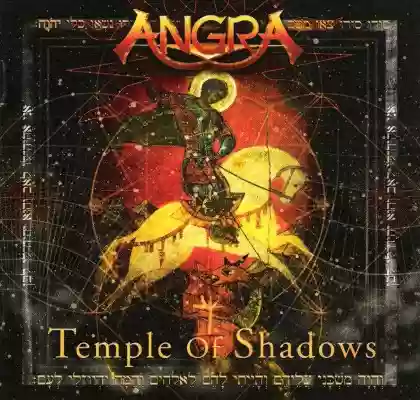
Great artists are recognized in difficult moments, during which one must prove their worth and be able to emerge from a heavy situation that has weighed on the band: being great artists means producing an album like "Temple Of Shadow"; it follows that Angra, pioneers of Brazilian metal, represent the true essence of great artists. Bolstered by excellent performances with the new lineup, the two guitarists Kiko Loureiro and Rafael Bittencourt (both endowed with enviable technique and musical taste) bring yet another masterpiece to life; "Temple" turns out to be a turning point for our musicians, who steer towards even more power-oriented coordinates, with the adoption of a more aggressive and less clean voice by the talented Eduardo Falaschi, with a greater presence of double bass drum layers by Priester and a lively bass that frames a rhythm section that presents itself varied and articulated throughout the album.
The album is composed of 13 episodes, all (or almost all) well-crafted, without major drops in style at any point, instead presenting peaks of significant compositional beauty (the foremost being Wishing Well); the album's theme tells of a white crusader named Shadow Hunter, who begins to question the ideals for which he is fighting (the holy war in the name of the Pope), and ultimately finds valid answers to his questions, and of course manages to fall in love. The album opens with "Deus Le Volt!", an atmospheric and majestic intro that introduces the first real song of the album: "Spread Your Fire"; the song opens fast and aggressive, with excellent solos from the guitar duo, which introduce truly uncommon singing for Angra's production; indeed, Edu embarks on aggressive and lower tones compared to the past. Drums and bass offer a solid and well-paced rhythm, which never shies away from changes in tempo and magnificent accelerations; excellent the instrumental part, in which the four musicians showcase all their class and technique. The final part is also good, which raises the tones, until fading out with a female operatic voice accompanying Falaschi's good voice. The third song, "Angels And Demons," continues on the same coordinates as the previous track: however, in this episode, we find better cues, the bass finds more space, the drums travel on much faster coordinates, suddenly changing tempos, the guitars offer a heavier contribution, but even in the solos they are praised for precision and speed. The voice partially returns to what was heard in albums like "Rebirth," with significantly higher and cleaner vocal peaks. The direction changes dramatically with "Waiting Silence," a track with strong progressive influences, which while maintaining a good dose of power, distances itself from what has been heard so far. The rhythmic section is very good, as well as the guitar melody. The instrumental part is compelling, with an excellent bass solo, accompanied by excellent drums developed more on the cymbals. We then move on to what seemed to me the best episode of the album: "Wishing Well," a very easy and melodic song, with an airy chorus, accompanied by a well-crafted choir. The simplicity during listening makes this song a little gem to listen to and listen to again.
We return to the purest power with "The Temple Of Hate," a very fast song that so much recalls the early Blind Guardian: the violent and rapid track is a crescendo of emotions, which explode in the excellent chorus, led by the vocalist who doses the voice particularly well. Once again, the instrumental section is excellent, with particular praise to the guitars that always do a very good job. With "The Shadow Hunter," an attempt is made to return to the era of Matos: the song, enriched by percussion and elements from Brazilian music, presents itself as an ideal meeting point between power/progressive and Brazilian folk. The intertwining between classical and electric guitars is excellent, but so is the rhythm section. The accompanying choirs to Falaschi's crystal-clear voice are also very enjoyable. We then move on to "No Pain For The Dead," a song that didn't quite thrill me, despite being full of emotion and excellently conducted in the instrumental part: the song, affected by a chorus not quite among the best, never manages to fully take off. The only note that stands out is the adoption of a female voice, which, although not exploited to its fullest, still gives a special touch to a song that doesn't shine like the others. "Winds Of Destination" turns out to be one of the best episodes: the track opens with an electric violin, then explodes into a speed track of notable charm. Strong this time are the references to classical music, which are more noticeable in the central part of the song, in which a fine piano accompanies Falaschi's theatrical voice. Brazilian rhythms open "Sprouts Of Time," a song as particular as it is beautiful: typical progressive tempos and South American melodies will accompany us on a fascinating 5-minute and 9-second journey to be discovered, accompanied by the sultry and warm voice of the vocalist. The bass lines are excellent. Percussions and a solo by Andreoli open "Morning Star," an almost "cheerful" song, which in the chorus is upended due to a very aggressive singing and a heavy guitar riff. A dreamy arpeggio of classical guitar introduces "Late Redemption," a reflective and calm song, in which Falaschi's good interpretative ability stands out. Although not particularly shining (due to not-so-splendid choirs, even if sung in the charming native language), the song is still pleasant to listen to.
The end of the album seemed particularly noteworthy: an imposing instrumental fantastically conducted by various instruments, making the song a true gem of music with a classic/modern flavor. The album concludes, I apologize for the length of the review, but it seemed necessary to say a few words (maybe a little more than a few) about this album, which I consider on the level of masterpieces like "Angel's Cry" and "Holy Land." Also excellent is the album's production and the overall performance of the musicians.
Loading comments slowly
Summary by Bot
The review praises Angra's Temple Of Shadows as a defining album that highlights the band's resilience and musical evolution. It emphasizes the excellent performances of the new lineup, the blend of power and progressive metal elements, and the compelling storytelling throughout the album. Standout tracks include "Wishing Well," and the album is noted for its superb production and instrumental mastery. Overall, it's regarded as a masterpiece equal to Angra's classic works.Tracklist Lyrics Videos
Angra
Angra is a Brazilian metal band known for blending power metal and progressive metal with classical/orchestral elements and Brazilian influences. The group’s early era featured vocalist André Matos; later releases feature vocalist Edu Falaschi, with guitarists Kiko Loureiro and Rafael Bittencourt frequently highlighted in reviews for their technique and songwriting.20 Reviews
Other reviews
By dying_sun
Temple of Shadows is sincerely promoted and deserves the purchase.
Angra has shown bravery and been rewarded, and as a result, so are we.
By Dreamtheater
"With this album, I changed my mind: it’s really well done, there’s everything... variety of instruments, good melodies, high-level metal tracks, skilled musicians."
"A CD with a thousand faces and colors, varied and enjoyable... an excellent CD for lovers of the genre."
By Dreamtheater
"Truly well done, it has everything... variety of instruments used, good melodies, metal tracks up to par, skilled musicians, rhythm changes, and naturally... references to Brazilian sound."
"A CD of a thousand faces and colors, varied and pleasant. Maybe there is too much shift from power to melody... but this is a typical characteristic of Angra, otherwise an excellent CD for fans of the genre."
By ilfreddo
If the banal power with dragons and muscular heroes on the cover is a McChicken or BigMac at the fast-food, Angra are a dish at a restaurant to be savored with due calmness.
The true masterpiece of Temple of Shadows in my opinion is 'The Shadow Hunter'—a triumphant moment to be savored by simply cranking up the volume.
