
 •
Rating:
•
Rating: THE REVIEW
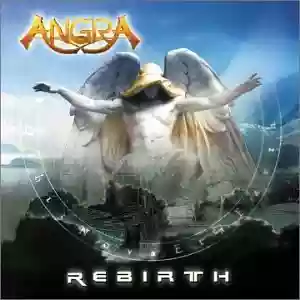
Rebirth... album of rebirth or "simple" continuation of what the award-winning Loureiro/Bittencourt duo did in the past??? In my opinion, a bit of both. A little historical preface: after the departure of three members of the original Angra (Matos, Mariutti, and Confessori who went on to form Shaman), the two guitarists decided to keep their musical reality alive by finding replacements for their three former companions, which many thought impossible, but to which Kiko and Rafael responded by recruiting: Eduardo Falaschi on vocals, Felipe Andreoli on bass, and Aquiles Priester on drums; the greatest challenge was thus finding someone capable of upholding the Angra name, a goal that I believe was achieved 100%, since even the "irreplaceable" Matos was excellently replaced by a superb vocalist like Edu. But let's talk about the album: Rebirth is a record that encapsulates the best aspects of Angels Cry and Holy Land, but with a less progressive and more power vein, appearing more compact and aggressive compared to the previous masterpieces of the Carioca's early production. The concept of the album is based on a fantastical story about a world destroyed by natural catastrophes and wars, in which those who survived decided to rebuild a new society, just as happened with Angra, and it is precisely this hopeful sentiment that pervades the album in all its aspects. The album opens with "In Excelsis", a menacing and triumphant intro that, in the band's most perfect style, leads us to the high-speed "Nova Era", akin to "Carry On", presenting itself as a truly effective speed track that aims to show us how this "new" band moves... well, the result is fantastic, the track unfolds in a complex but not overly so structure, rich with solos, fantastic vocal lines, and varied tempo changes, which never go amiss, to be clear. The instrumental part is beautifully performed by Kiko and Rafael's guitars, accompanied by a strong bass and a carpet of double bass drum. After this phase of the song, Edu returns to delight us with his great voice, leading us to the end of this 2nd track. We then move on to "Millennium Sun", a track that develops in its first part on a delicate piano base with very heartfelt and passionate singing, but at 1 minute and 28 seconds, it explodes into a beautiful guitar riff, opening the doors to let us enjoy a splendid power/prog song so dear to the band. The final result is truly positive, with Falaschi giving his best and proving to be on the same qualitative level as Andre Matos. The chorus of the song is also beautiful, almost like a liberating cry, of rebirth, followed by one of Loureiro's best solos (in my opinion). The other band members, as usual, do excellent work. Latin choirs, on the other hand, open the beautiful "Acid Rain", the most power song on the album, which, between aggressive and fast parts, shows us a singer with a truly varied voice, hitting some very high notes as well as lower and more aggressive ones. Excellent work in this case from Andreoli and Priester, who offer a solid and powerful rhythmic base. Once again, the instrumental part is beautiful, alternating between blistering solos and parts that lean more towards Brazilian music. The 5th song brings more great emotions with "Heroes OF Sand", certainly the most melodic of the album (concerning the power tracks) which, without exaggerating with complex tempos or overly complicated solos, flows excellently into our ears thanks to a fantastic melody and also some beautiful background choirs. "Unholy Wars" is the most structurally studied track of the album, the most progressive: primarily based on tempo changes, odd times, and various acrobatics, the song turns out to be particularly enjoyable in all its aspects, precisely thanks to this variety it offers. The bass solo is beautiful, "eclipsing" all the other elements and truly showing us how talented this young bassist is (but the whole band is). Another well-hit mark is the title track, which, between classical and electric guitars, has already become an Angra classic, not at all overshadowing songs like "Carolina IV" and "Carry On". Edu's vocal lines are beautiful, leading us to a fantastic chorus after a particularly heartfelt and deep verse, introducing us to the most aggressive part of the song, which moves along coordinates similar to those composed in the first part, but presenting itself even more charged with pathos. "Judgement Day" is perhaps the least interesting track on the album, almost a filler, I think: what motivates this consideration of mine is the fact that the song wants to be prog, but this vein never emerges due to a particular melodic awkwardness. Following this, we find another beautiful composition, which is both similar to and different from "Evil Warning" (do you remember??? that beautiful piece in Angels Cry), similar in its intro and the solo that follows it, different for some of the atmospheres it creates. A song not particularly original but truly enjoyable. Another difference surely lies in the vocal lines, which in this case are lower and more aggressive. "Vision" is the album's outro, a beautiful deep ballad performed by Falaschi in a way very reminiscent of Matos. Ultimately, this album is to be considered as a meeting point between a New Era and a Previous one, capable of satisfying new and old fans of the Carioca, well-produced and packaged: I highly recommend buying it, you won't regret it.
Loading comments slowly
Summary by Bot
Angra's 'Rebirth' marks a successful continuation and evolution after significant lineup changes, featuring powerful vocals by Eduardo Falaschi and impressive musicianship. The album blends the best elements of previous Angra releases with a more aggressive power metal focus. Through a concept album about destruction and rebuilding, Angra delivers memorable songs full of melody, technical skill, and emotional depth. Overall, it is highly recommended for fans old and new.Tracklist Lyrics Videos
Angra
Angra is a Brazilian metal band known for blending power metal and progressive metal with classical/orchestral elements and Brazilian influences. The group’s early era featured vocalist André Matos; later releases feature vocalist Edu Falaschi, with guitarists Kiko Loureiro and Rafael Bittencourt frequently highlighted in reviews for their technique and songwriting.20 Reviews
Other reviews
By Dreamtheater
'Millennium Sun' is, in my opinion, the best of the whole album, beginning very quietly with Edu Falaschi’s splendid voice in the foreground.
The album flows smoothly, never boring, with very good melodies in each track, making it one of their best works.
