
 •
Rating:
•
Rating:
THE REVIEW
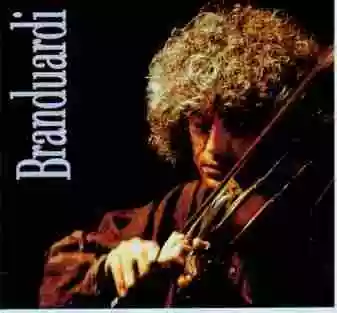
1996. Among many unreleased tracks, successful or not, new hits, Sanremo meteors, collections, live albums, and numerous attempts, there is also the second, and almost certainly the most well-known, live album by Angelo Branduardi. A folk and folk rock artist, but not only that. A master violinist, a classical and acoustic guitarist with excellent technical preparation, but there's more. Because Branduardi is also one of the very few Italian singer-songwriters to organize a kind of "time travel" with talent and refinement for those sounds, those instruments, and those words that, even before the baroque and neoclassical genius, have somehow built the most solid foundations that popular music could desire. Personal tastes or not, we all more or less agree that his instrumental touch, his eclecticism in composition, and his continuous research with pen and score continuously infused with the sounds of the Middle Ages and the classical era are at least something unusual in the Italian singer-songwriter scene of the '70s.
Beyond historical study and preparation, there is the more practical side. For years he has written excellent unreleased tracks, perhaps not as successful as his most famous discographical triptych ("Alla fiera dell'Est" of 1976, "La pulce d'acqua" of 1977 and "Cogli la prima mela" of 1979) but always characterized by their originality and peculiarities, plus some collections, but it has been sixteen years since his last live album. His "Camminando camminando" tour (the name comes from a passage of a song, "I Santi", of 1994, from the album "Domenica e Lunedì", among the most recent ones contained in the album) achieves worldwide success. In France, Germany, Austria, and Switzerland, the multi-instrumentalist from Cuggiono seems to be even more considered and esteemed than in Italy. The musicians who accompany him are certainly not unknown novices: Andrea Braido and Corrado Sfogli, for example, "color" the guitars, predominantly classical ones, and ensure they gain an importance almost equal to Angelo's violin, sometimes set aside to pick up a third guitar. These very well-studied acoustic sounds contribute to giving personality to a show that already in itself, as can be heard on the record, has nothing banal or boring. Almost phenomenal the acoustic intro, very fresh and sparkling, created for "Cogli la prima mela", in "La Pulce d'Acqua" the choice not to bring the oboe and the clarinet, which characterized the catchy original version, onto the stage makes way, however, for the violin, mandolin, and flute: a remake that absolutely doesn't harm the song, simpler in a positive way. Even without medieval instruments and enormous orchestras on stage, the folk and historical atmosphere on the record is recreated with ease. The fantastic "Ballo in fa diesis minore", between text and perfect musical atmosphere, is perhaps the only one that, in the live version, evokes a longing for the harpsichord, trumpets, and drums (but we are talking, for those who do not know it, about a piece that, to be reproduced perfectly live, requires at least a specialized orchestra) but I do not feel like criticizing it much because it remains, in my opinion, one of the highest examples of Italian folk, in any version (along with, of course, the melody that inspired it, "Schiarazzula Marazzula", and the text that served as its basis, an old recording from Northern Italy). "Vanità di Vanità" (which I remember fondly for being the introductory song of a show in which I performed at the high school theatre workshop) and "Il dono del cervo" do not change much, only slightly because of the maturation of the voice compared to the studio version, recorded more than fifteen years earlier in both cases. This happens, more or less, also with "Alla fiera dell'Est", among his classics that could not be missed (in addition to those already mentioned, also "Il violinista di Dooney" and "Il signore di Baux"), while "Si può fare", while remaining a piece with a folk musical orientation, gains pop nuances in the introduction and "Fou de Love", in addition to the characteristic text rich in ethnic nuances (a balance between poetry in Latin and Germanic languages of rare excellence), is enriched by Braido's refined electric guitar, a rather rare thing in Branduardi's historical repertoire. Wanting to highlight two things I do not like that much, the absence of "Confessioni di un malandrino" among the niche songs and its replacement with "La luna", which I consider much less original both textually and musically.
Before closing, a few small curiosities: for those who own the record, there is also an opening greeting in German (in fact, many of the elements were recorded on the German tour dates) and among successes and niches, there are also two excellent unreleased tracks, a bit outside the style of the entire album, but appreciable ("Piccola Canzone dei Contrari" and "L'apprendista stregone") for their original and fresh sounds and for their texts, signed by Giorgio Faletti, very funny and quite entertaining, cute.
In conclusion, I can say that "Camminando Camminando" was Branduardi's most appreciated live album because it truly contains the best of his repertoire, rearranged and refreshed in sounds, and I admit that I would have liked to see those concerts, if only to learn to know the repertoire of such an original, spontaneous, genuine, and technically excellent singer-songwriter sooner. Wanting to be theatrical, an orgy of sounds and sonic colors that deserves a listen.
Loading comments slowly
Summary by Bot
Angelo Branduardi's 1996 live album 'Camminando camminando' is a refined musical journey that highlights his unique blend of folk, classical, and medieval influences. The album showcases exceptional musicianship and fresh arrangements of his best repertoire. Featuring skilled collaborators and international appreciation, this album remains a standout live recording in his career. Despite minor personal preferences on track selection, the album's richness and originality are undeniable.Tracklist Lyrics Videos
Angelo Branduardi
Angelo Branduardi is an Italian singer-songwriter and multi-instrumentalist, widely described in these reviews as a minstrel-like artist whose music blends folk writing with medieval, Renaissance, classical and Celtic/ethnic influences, often led by violin and acoustic guitar.17 Reviews
