
 •
Rating:
•
Rating:
THE REVIEW
On August 6, 1979, two very young bands, not yet having released their respective debut albums, shared the stage at the Music Machine in London.
The first to perform were the Angel Witch. The second, a young band whose bassist, a certain Steve Harris, was rumored to be a real phenomenon. Within a few years, the two bands would never be able to cross paths on a stage again: the latter were busy on some world tour, and the former became little more than a memory.
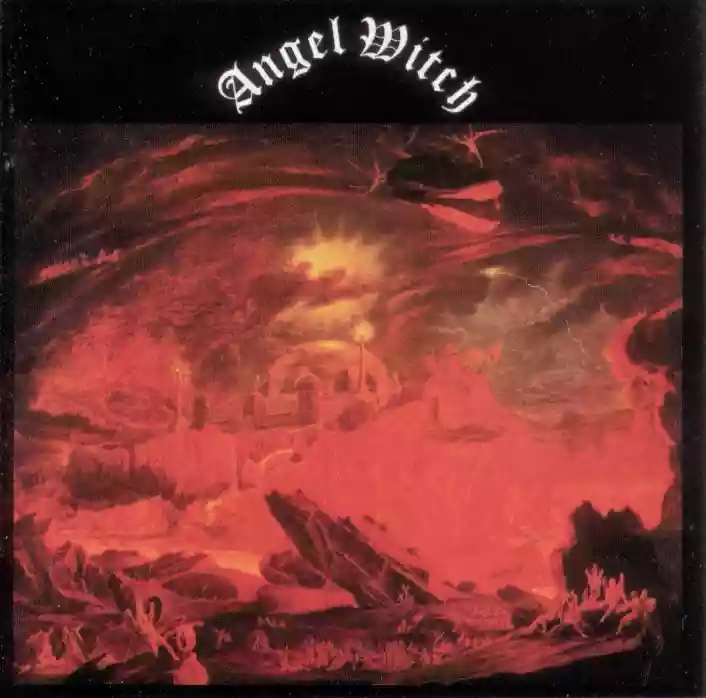
“Angel Witch” was released in 1980 under the Bronze label and is a creature as beautiful as it is sad, haunting and melancholic. Dressed in the colors of hell, yet so brilliant that it remains undimmed by the passage of time. Born from the mind, fingers, and heart of one of destiny's favorite victims (Kevin Heybourne, singer and guitarist), this album is unanimously considered among the most lucid and successful episodes of the entire NWOBHM, matched only by a handful of other albums (read “Lighting to the Nation”, “On Through The Night”, the first Maiden...).
Albums like this are usually described as “seminal” or “essential”… well, at the risk of being inappropriately bold, I'd say that “necessary” can be equally appropriate. Necessary for its originality, inspiration and the influence of some musical and graphic solutions (starting with the satanic cover: John Martin's painting, “The Fallen Angels Entering Pandemonium”), as well as for the approach to the themes addressed in the lyrics: nightmare and the occult, witchcraft and mystery, seen, however, in a mainly romantic, dreamlike, and passionate key. A definitely refined puzzle, therefore, but direct and immediate, a magical amalgam of some of the most disparate sound and visual elements that will inspire entire generations of metal fans to come.
Sources and inspirations can be found almost everywhere, musically and beyond: the attack of “Sweet Danger” is almost a second “Bastille Day” by Rush, the splendid “Sorcerers” seems to be the product of the same mind that conceived “Remember Tomorrow”, and then Black Sabbath in the instrumental “Devils Tower”, the books of Dennis Wheatly, up to a patient of the asylum where Heybourne was a doorman (who inspired the lyrics of “White Witch”). Yet all this would not have been enough. Heybourne's voice was needed, perhaps not exceptional on a technical level, but melancholic and suffering, perpetually prey to a hidden sadness, ready, however, if necessary, to become sharp and hoarse, harsh and abrasive. Those guitar riffs were needed (almost relegated to the background by a production entrusted to the then-novice Martin Smith), so effective in their simplicity. Above all, those continuous changes of register that range from the horrific atmospheres of the open-eyed nightmare of “Angel of Death”, through the attack of the legendary opener (brilliant in its immediacy), to the devoted, dark-tinted romanticism of “Sorcerers”.
The courage, in short, to explore (but perhaps it would be more correct to say “invent”) metal in all its facets, from those more catchy and engaging, almost hard rock-oriented, of “Confused”, to the more intimate ones of the power ballad “Free Man”. However, as anticipated, it was not meant for Heybourne and Angel Witch to achieve success. Shortly after the release of the EP “Loser” in '81, Dave Hogg (drums) and Kevin Skids (bass) would leave the band. This would start a whirlwind of formations, lineup changes, sporadic (and not always successful) live performances that, instead of keeping the audience's interest alive, would risk diminishing what a band and its leader had done for metal.
There will be numerous live performances and compilations. The subsequent albums of new material are dignified. None, however, will be able to equal the caressed perfection of the debut.
Loading comments slowly
Summary by Bot
Angel Witch's self-titled debut, released in 1980, is a cornerstone of the NWOBHM scene marked by its originality and haunting themes. Kevin Heybourne's melancholic vocals and effective guitar riffs create a timeless, inspired metal masterpiece. Despite early promise, lineup instability hindered further success. The album remains essential listening for metal fans and is praised for its blend of musical influences and evocative artwork. It stands as a necessary and influential relic in heavy metal history.Tracklist Lyrics Videos
Angel Witch
Angel Witch is an English heavy metal band from London, formed in 1977 by guitarist-singer Kevin Heybourne. A key name in the New Wave of British Heavy Metal, they debuted with the influential self-titled album in 1980 and later released albums including Screamin’ n’ Bleedin’ (1985), Frontal Assault (1986), As Above, So Below (2012), and Angel of Light (2019).02 Reviews
