
 •
Rating:
•
Rating: THE REVIEW
The style of King Crimson, particularly during the second period (thus the respective works "Larks' Tongues In Aspic," "Starless and Bible Black," and "Red"), has left a significant mark on the Rock of the '90s and on today's music: the Math Rock of Don Caballero, the Prog-Metal of Tool, and the Post-Rock of GY!BE are some of the main examples of this stylistic influence.
Wettonian bass lines, Frippian intricate guitar work, the expressiveness of Bruford's drumming, and the sublime violin of David Cross represent essential "trademarks."
The early '90s was also a very good period for true Progressive Rock, as bands such as Anekdoten, Landberk, and Anglagard formed in Sweden.
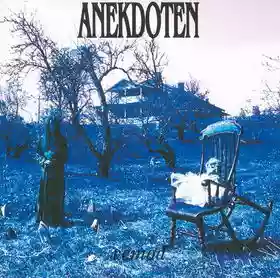
1993 marks the recording debut of Anekdoten with "Vemod," an album that is very cohesive. The aforementioned King Crimson elements blend perfectly with the vocals and the keyboard background by Per Wiberg (a current member of their compatriots Opeth).
We find more eclectic tracks like "Karelia" and "Where Solitude Remains," which have a structure that might relatively resemble certain "Starless" elements but also includes some gigantically gentle symphonies. "Thought In Absence" furthermore represents the calmest moment of the album, a sort of "weekend read."
In this debut work, the guitar parts by Nicklas Berg are more prominently highlighted. The band further developed their style with the subsequent "Nucleus," relatively moving away from these sounds and venturing into works where more "accessible" parts are not lacking, such as in "Gravity" and the more recent "A Time of Day," dominated by the Mellotron sound.
As far as I am concerned, Anekdoten are among the most original bands of the '90s scene and the current one. Comparing them with certain key bands of the genre is surely necessary to understand their sounds and artistic influences, but their compositional skill does not leave any sense of déjà vu.
Loading comments slowly
Summary by Bot
Anekdoten's debut album 'Vemod' showcases a strong influence from King Crimson's early 70s work blended with original Swedish progressive rock elements. The album features expressive instrumentation, including bass lines, guitar work, and violin. The review highlights the band's compositional skills and their evolution in later albums. 'Vemod' is praised as a cohesive and eclectic progressive rock record with moments of calm and complexity.Tracklist Lyrics Videos
Anekdoten
Anekdoten is a Swedish progressive rock band formed in 1990. Known for Mellotron-rich arrangements, powerful basslines and dark, reflective atmospheres, they debuted with Vemod (1993) and continued with acclaimed albums including Nucleus (1995), From Within (1999), Gravity (2003), A Time of Day (2007), and Until All the Ghosts Are Gone (2015).05 Reviews
