
 •
Rating:
•
Rating:
THE REVIEW
The musical productions originating from the southwestern side of Sardinia inevitably feel the effects of the distance from the main gathering hub in the south of the island, Cagliari.
The higher density of the urban context translates into a wide variety of offerings, making it easier to compartmentalize within the closed circuits commonly known as “music scenes.”
Nevertheless, there are some exceptions that, despite escaping this dynamic, live and define their identity starting from their sonic and attitudinal otherness compared to the cultural center.
This is the case with Andersaund, a duo consisting of Hussein Blatta (drums) and Davide Brescello (guitar, bass, and vocals), based in Fluminimaggiore (SU), and closely tied to the distribution work of the DIY label Ghaul Records: an aggregation hub for heterogeneous musical projects, founded and managed by Alessandro Usai and Alessio Milia.
Active since 2012, the band has behind them a path dotted with various releases, including “Aranciomarcio” (2015), “Sul Reparto D’assalto E…” (2016), “Stortosuono Fasico” (2021), and the single “3+5=8” (2022).
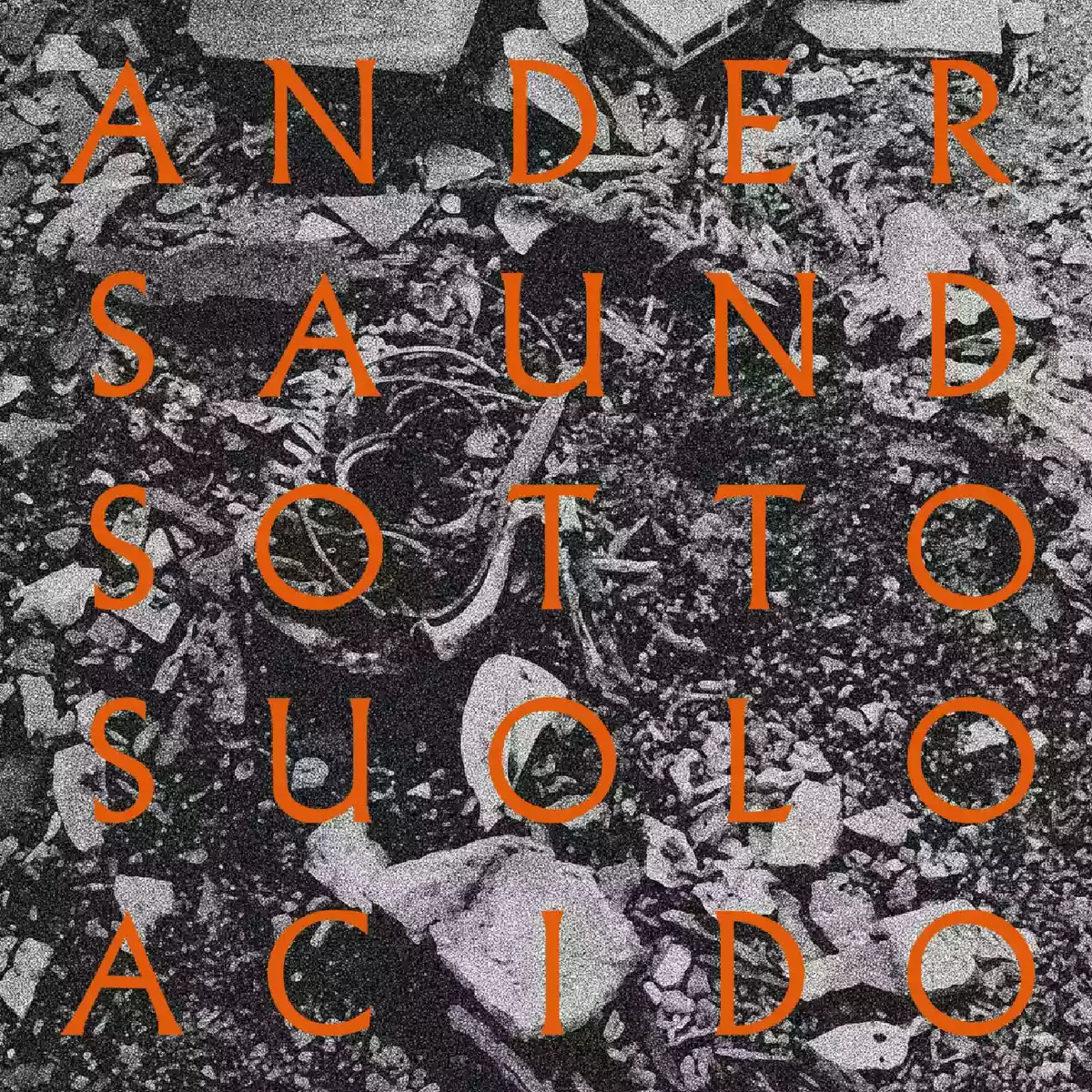
It is precisely within this peripheral dimension, detached from scene logics, that “SottoSuolo Acido” (2022) takes shape: released in two parts on the label’s bandcamp page and collected physically on a single CD.
The band’s latest work radicalizes the premises previously expressed within an apparently harsh production, which nevertheless does not forgo a certain compositional elegance, helping to define its uniqueness.
The album, in fact, manages to strike a remarkable balance between the band’s two souls: the instrumental and anarchic one, which constitutes the bulk of their output, and the other, previously unreleased, capable of organically incorporating vocals within the compositions.
The first of these dimensions emerges in “Bioacid,” in which stoner rock and doom metal influences are condensed into riffs that are as heavy as they are catchy. Moreover, the piece is enriched by a central section in 3/4 featuring an elegant solo that fades into the driving final section.
“Burdozzer” follows in its footsteps, also standing out thanks to the great dynamism of the drum part. Concluding the track, introduced by panning on both channels, is the final breakdown which, played with a closed hi-hat, sets itself apart from an otherwise typically metalcore solution.
Despite its affinity with previous works, the instrumental tracks display greater attention to compositional structure control, anchoring themselves to a more canonical form.
The band’s second soul shines brightly in the opener “Eliogabalo”: a track that reworks the aforementioned influences with a punk twist, all within a pop structure able to elevate it without dulling its abrasiveness.
The lyrics, taking the much-maligned Roman emperor as a starting point, play with a metaphor that, without any intellectual pretensions, draws a precise portrait of a type of personality so transversal as to become universal.
Also standing out in the tracklist is “PS1” which, in its verse-chorus-verse structure, highlights the highly inspired vocal section by Davide Brescello, accompanied by riffs of great melodic taste.
“3604” is one of the album’s compositional peaks: the division into two verses and two choruses fully brings out the duo’s songwriting ability in a track where the imposing guitar part accompanies an extremely memorable vocal line. In this sense, Blatta’s presence, doubling the main melody one octave down, plays an important role by employing a simple, effective, and immediate harmony.
Finally, standing out are “AcidFaz,” whose pressing and extremely claustrophobic riffs perfectly fit the theme of death permeating the lyrics, and “Blattenellebare,” sustained by the groove of the main riff and an impactful vocal part, especially in the chorus.
Ultimately, “SottoSuolo Acido” represents a significant milestone in a process that is still ongoing, skillfully combining instinct and compositional awareness.
Despite a distinctly lo-fi production in which the vocals are sometimes sacrificed in the mix, especially when listening in stereo format, the album stands out for its ironic and inspired approach, able to capture the listener from the very first listen.
The result is a work that stands out thanks to songs full of drive and energy, whose strength is such that it bursts through the speakers, regardless of its production limitations.
Loading comments slowly
Summary by Bot
The review gives Andersaund's "SottoSuolo Acido" a moderate score, praising its experimental nature but noting it may not appeal to all listeners. It highlights the album's innovative approach and textured soundscapes. The reviewer remains objective, assessing both strengths and weaknesses. Readers get a balanced perspective on the album's appeal. Suitable for those curious about underground and experimental music trends.
Andersaund
Andersaund is a Sardinian duo—HusseinBlatta (drums) and Davide Brescello (guitar, bass, vocals)—based in Fluminimaggiore (SU). Active since 2012 and tied to DIY label Ghaul Records (run by Alessandro Usai and Alessio Milia), they fuse stoner/doom weight with punk immediacy. Their 2022 album SottoSuolo Acido balances instrumental ferocity with newly integrated vocals.01 Reviews
