
 •
Rating:
•
Rating:
THE REVIEW
It's a terrible thing to be remembered as a one-hit wonder or as a fleeting phenomenon tied to a specific moment: mainstream-popular radios dig you up from time to time, always and only with THAT same piece, almost on par with "Anima Mia", and in the minds of radio/TV-dependent people, the conviction forms that you, a serious, talented, and quality artist, are a sideshow phenomenon capable of crafting only one or two songs. This happened to Alphaville too, who, perhaps because they were German and not English/American, were quickly forgotten after the initial success of "Big In Japan" and "Forever Young". But did this Western-teutonic combo, one of the last to be classified as a pop-group with full dignity before the term became associated with low-grade boybands, really deserve this fate? A rhetorical question to which the answer is obviously no: why, for example, do the Pet Shop Boys, Depeche Mode, or even worse, Duran Duran still enjoy good/great visibility and they don't? Who knows, mysteries and idiocies of the music biz.
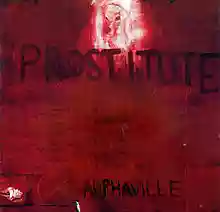
To avoid misunderstandings, "Forever Young" truly was the album of a lifetime for Marian Gold and crew: absolutely perfect, without a misplaced song, ennobled by synth-pop masterpieces among which "A Victory Of Love", "Summer In Berlin", "In The Mood", and "Sounds Like A Melody" shine. The subsequent years received a warm welcome for the sophomore "Afternoons In Utopia", inferior to the debut but still interesting and rich in excellent ideas, then oblivion comes with "The Breathtaking Blue", a little gem that broadens Alphaville's horizons by proposing varied styles that occasionally wink at other artists, like Falco in "Middle Of The Riddle", Marc Almond in "Summer Rain", and even Leonard Cohen (listen to believe) in "Heaven Or Hell". Yes, the plethora of critics and music press in 1989 was too busy dissecting every single detail of the "Like A Prayer" video to notice Alphaville's artistic growth and maturation, and thus the group took a break that allowed Marian Gold to debut as a solo artist, then, five years later, they returned with an album that, starting from the title and cover, seemed to want to repel distracted and occasional listeners; yes, because "Prostitute" appears decidedly distant from the radio standards of the mid-90s, a period when unknown pop starlets like Alanis Morissette suddenly discovered they had a rock soul, and even Kiss and Motley Crue dabbled in parroting grunge, Alphaville managed to proudly impose their personality, creating the most complex, eclectic, fascinating, and ambitious album of their entire career.
Seventy minutes of duration is a challenging length, but "Prostitute" manages to fill nearly all of them with great style: the album does not follow a specific stylistic thread other than quality: it moves nonchalantly from the Pink Floyd-esque suggestions of an intriguing and declamatory "The Paradigm Shift" to the carefree and laid-back reggae of "Faith", managing to amaze with a breathtaking power-ballad like "The Impossible Dream", complete with a final guitar solo, showcasing a musical and stylistic taste and emotion completely unknown to the insipid ballads of many groups who call themselves rock-bands. "Prostitute" also develops a musical discourse already started in 1989 with masterful and poignant piano-ballads like the anguished and anti-militarist "Parade" and the intimate, enveloping drama of "All In The Golden Afternoon", proving to be much more than a mere synth-pop group.
But the surprises don't end there, "Prostitute" also explores funk/urban territories bordering on hip-hop with "Beethoven" and especially the fantastic "Ain't It Strange", all bass & brass featuring a rap interlude without forgetting Alphaville's origins: the electronics-based pop that had established them is well represented in this kaleidoscopic album, in various forms: the sonorous and martial "Ascension Day", the epic refrain of "Iron John", perhaps the most distinctly '80s point of the work, "Ivory Tower", an enchanting concatenation of retrospective self-references on a wonderfully danceable and slightly gothic base, the hypnotic atmosphere of "Euphoria" that unfolds over seven minutes introduced by a majestic bluesy guitar solo only to culminate in an enthusiastically choral finale, and finally "Apollo", a sparkling synth-gallop sealed in the best way by whirling electronic beats (many dance-oriented Muse tracks echo much of this style), marking the absolute pinnacle (and unfortunately de facto also the swan song) of Alphaville.
Indeed, after this marvelous achievement, Marian Gold and compatriots lost their way; in 1997 came the merely decent "Salvation", then nothing more until the recent and mediocre "Catching Rays On Giant", thus adding the name Alphaville to the list of children devoured by the Saturn of the music industry, but their legacy remains extraordinary, "Prostitute" remains a perfect example of noble Pop, artisanally crafted, art and not an artificial product, aimed at listeners and not customers, if not for a couple of mere fillers, it would be a full 5-star, but even so, it remains a truly superlative product.
Loading comments slowly
Summary by Bot
This review highlights Alphaville’s 1994 album 'Prostitute' as a bold and ambitious work showcasing their evolution beyond 80s synth-pop. It praises the album's stylistic diversity, emotional depth, and artistic quality, while lamenting their relative obscurity compared to contemporaries. Despite minor filler tracks, 'Prostitute' stands as a superlative and complex pop achievement.Tracklist Lyrics Videos
Alphaville
Alphaville are a German synth-pop/new wave group formed in 1982 in Münster by Marian Gold, Bernhard Lloyd, and Frank Mertens. Named after Jean‑Luc Godard’s film, they broke through with the 1984 singles “Big in Japan,” “Sounds Like a Melody,” and the iconic “Forever Young,” and continued with albums including Afternoons in Utopia, The Breathtaking Blue, and Prostitute.04 Reviews
