
 •
Rating:
•
Rating:
THE REVIEW
It's 1970 when Vincent Furnier, leader of Alice Cooper (Vincent will dissolve the group only after "Muscle Of Love," retaining the name and thus embarking on a solo career), moves the group to Detroit.
The band has two albums under their belt produced by Frank Zappa, "Pretties For You" and "Easy Action," hybrids of horror rock and late '60s psychedelia that weren't very successful, labeling the group as "the worst band in Los Angeles." The albums would be partially re-evaluated only later, but several years would have to pass. In this context, Alice decides to unmask and dedicate himself to raw and unadulterated rock, in which he manages to maneuver with great skill.
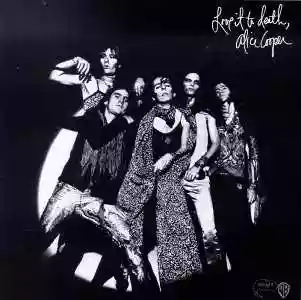
The result is "Love It To Death," produced by Warner. Thanks to a simple and immediate musical formula and the single "I'm Eighteen," the album forcefully reaches the higher echelons of the charts. A significant contribution was also made by the "Alice Cooper Show," a temple of musical irreverence, the favorite dish of the most polemical critics, and daily bread for the youth audience. Thanks to his irreverent lyrics that address the most "taboo" subjects (sex, drugs, politics, religion), ambiguous declarations on transvestitism, boas wandering the stage, and various mutilations, Vincent/Alice becomes the symbol of nonconformity. The few traces of the psychedelic past can be found in the lengthy "Black Juju" and in the guitar lines of "Hallowed By My Name," but it's in songs like "Caught In A Dream" that Cooper/Furnier will find his space, making that simple formula his trademark. Passing through "Long Way To Go" and "Is It My Body," we find the baptism of this extravagant character who would soon explode in all his "horror."
And despite the talk of compositions often simple (and to many, predictable), one cannot help but be enchanted by Vincent's great theatricality. Not for nothing, the phrase by Waters "Nobody in our band can play the guitar like Eric Clapton or hold the stage like Alice Cooper" will remain famous. One of the best (if not the best) albums of Alice Cooper "group," as the true masterpiece would come years later with "Welcome To My Nightmare," the best album of Alice Cooper "solo." "Ballad Of Dwight Fry" teaches.
Loading comments slowly
Summary by Bot
Love It To Death marks the breakthrough of Alice Cooper with a raw and immediate rock style, shedding past psychedelic influences. The album's hit single 'I'm Eighteen' propelled them to success. Vincent Furnier's theatrical and irreverent approach challenged norms with provocative lyrics and stage antics. Despite some simple compositions, the album's energy and rebellious spirit captivated audiences. It remains one of the best works of the Alice Cooper band era.Tracklist Lyrics Videos
Alice Cooper
Alice Cooper is the stage name of Vincent Damon Furnier (born February 4, 1948), an American singer-songwriter known for pioneering shock rock and theatrical stage shows.34 Reviews
Other reviews
By MauroCincotta66
"Ceremony and desperation share the same sky; riffs and melodies share the same ground."
"The hippies wanted peace and love. We wanted Ferraris, blondes, and switchblades."
