
 •
Rating:
•
Rating:
THE REVIEW
For some strange reason, when writing or talking about the guiding spirits of hard rock from the seventies, Alice Cooper's name is sometimes omitted.
People never forget Led Zeppelin, Black Sabbath, Deep Purple, and Kiss, but the good old Vincent Damon Furnier (born February 4, 1948, son of a Protestant pastor) sometimes slips through the cracks. Or they only remember his "resurrection" in the '80s with the album 'Trash' and especially the single 'Poison'. Yet, his importance, both artistically and commercially, is comparable to that of the untouchable groups mentioned earlier: just think of the spectacle arranged every time by this man (or woman, according to him, who prophesies himself as the reincarnation of a 1600s witch named Alice Cooper) in the grand concerts held all over the globe, concerts that still cause a stir for the gory and grand-guignolesque atmosphere that pervades them (much to the delight of Marilyn Manson).
Alice Cooper's artistic career began in 1970, leading in the following years to masterpieces of the caliber of "Love It To Death" (1971, featuring the immortal anthem "I'm Eighteen"), "Killer" (1971), and "School's Out" (1972), a trilogy that inaugurated the decisive partnership with producer Bob Ezrin.
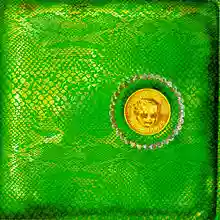
In 1973, the quintet's state of grace (which includes the mention-worthy skilled guitarists Glen Buxton, who passed away in October '97, and Michael Bruce) is such that ten medium-short length tracks are enough to propel 'Billion Dollar Babies' to the top of the US sales charts.
The album opens with the legendary "Hello Hooray" with the screaming vocals of mister/miss Alice dominating in a song that is elegant and solemn at the same time. The following "Raped And Freezin" is a bit more unrestrained and has a rhythm that immediately sticks in your head and makes it impossible to stay still, but it's with "Elected" that the heaviness increases exponentially, presenting a catchy and repetitive track that stands as one of the album's highlights, still a mainstay of Uncle Alice's show setlists today. Track number 4, the title track of the record, is perhaps the strangest episode, due to a broken riff and very incisive bass line; the singing is a mix of various voices, some of which almost seem to have escaped from a cartoon, contributing to a result that is pleasing overall, embellished by a great final solo. More splendid rock alchemy with "Unfinished Sweet" precedes the classic "No More Mister Nice Guy," another of Alice Cooper's countless generational anthems and undoubtedly the best song on the album for its immediacy and quality; the riff is superb and will become one of the most copied and imitated by countless bands around the world. Without any hesitation, this song can be compared to other memorable and legendary songs like "Paranoid," "Rock And Roll," and "Detroit Rock City". The following "Generation Landslide" won't become equally famous, but its potential will prove slightly less while "Sick Things" turns out to be a sinister and morbid apology for perversion, orchestrated in a truly memorable crescendo of tension. The wonderful piano ballad "Mary Ann" is then the prelude to the delirious and necrophiliac "I Love The Dead," a worthy black epitaph for an epochal album that still feels relevant today.
Before falling victim to his own character and entering the tunnel of self-destruction, still leaving an absolute masterpiece with "Welcome To My Nightmare" (1975), Alice Cooper was one of the most excellent and visionary rock minstrels of the seventies, a master of exaggerated and intelligent provocation, with shock concerts that will remain an unattainable peak for anyone.
Loading comments slowly
Summary by Bot
This review highlights Alice Cooper's often overlooked yet crucial role in 70s hard rock, focusing on his 1973 album Billion Dollar Babies. It praises the album's hit tracks, theatrical style, and lasting influence. The review contextualizes Cooper's artistry within the era and acknowledges his pioneering shock rock legacy. Standout songs like 'No More Mister Nice Guy' and 'Elected' are emphasized as quintessential rock anthems. Overall, the review champions the album as a timeless classic that remains vital today.
Alice Cooper
Alice Cooper is the stage name of Vincent Damon Furnier (born February 4, 1948), an American singer-songwriter known for pioneering shock rock and theatrical stage shows.34 Reviews
Other reviews
By Valeriorivoli
Vincent Furnier by birth, earns the No.1 spot in the 70s glam rock chart: the most jester-like, the most grand-guignol, a true punk ante litteram.
Alice has always been very clear about his music: "rock needs trash," he said, "when it gets too refined then it needs people like me to make crap music and tasteless shows."
