
 •
Rating:
•
Rating:
THE REVIEW
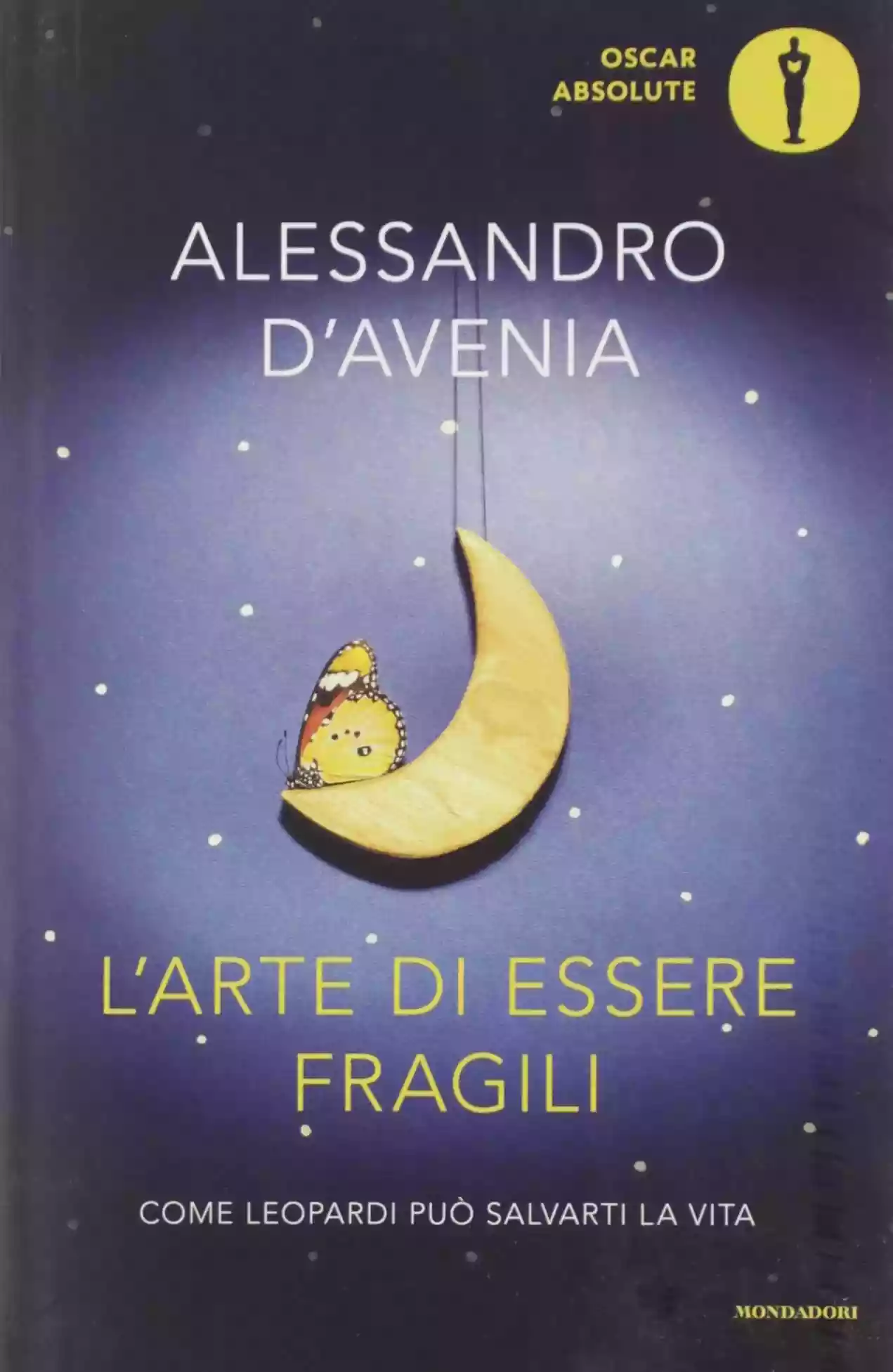
The poet hated by many students of the past and present, Giacomo Leopardi, famous for his misfortunes and works dominated by pessimism (cosmic, as defined by scholars of his work), is reinterpreted and reevaluated in his short life and works as a guide for youth by the writer (but also teacher and screenwriter) Alessandro D’Avenia, author of three successful novels ('White as Milk, Red as Blood', 'Things That No One Knows', and 'What Hell Is Not'), whose protagonists are teenagers with unconventional lives who understand life through particular experiences, many of which are painful.
In a book where he addresses the poet using "tu", recounting his life experiences, quoting and explaining his works, and applying their content to show what and how to do to build a valuable life, the author claims that as human beings, we have forgotten the art of being happy, more focused on results than on people, neglecting to take care of ourselves as living beings, called to be more alive day by day, capable of a destiny (understood as a task assigned, of which an individual is called to take full responsibility and realize it) unknown and settling for wearily traversing the repetition of joyless days. Added to this is living in an era where people are valued only if they are perfect.
The book is divided into four sections, three of which correspond to the life phases of the poet: 'Adolescence (or the art of hoping)', 'Maturity (or the art of dying)', 'Repair (or the art of being fragile)', and 'Dying (or the art of being reborn)'.
Presenting Leopardi's adolescence and maturity where the poet sought to know the world and happiness first through the books of his father's enormous library and nature and then by traveling to some Italian cities between 1822 and 1828, with the disappointment of not having found what he was looking for, the author asserts that every adolescent has a destiny to discover and it is their duty in the moment of maturity to strive with all their strength to accomplish it, regardless of whether they succeed or not, encountering everything in life that makes one experience death (what Leopardi means by the clash with obstacles, failures, the consequent sadness, and wounds that life opposes to the rapture—vocation [explained by the same author in a conference], ndt/note of the reviewer—and to the excess of hope that characterizes adolescence), while seeking to achieve what is worth living for (a project, a relationship, a job): an important message for the current generation of adolescents who have been given everything, but with the weakness of not being able to adequately face the world or have a valid/ndt reason to live life.
Among the many elements useful for the sense of a fragile life, there is undoubtedly friendship: to repair an apparently unfortunate existence (also with rejections in love, including the famous one by the Florentine noble Fanny Targioni Tozzetti), Leopardi found comfort in the last years of his life in the friendship of two siblings, Antonio and Paolina Ranieri. And it is friendship that is one of the secrets to repairing oneself and others from the sufferings of life because it is necessary to nourish oneself from the effort of existence and to transform death into life, since only friends, the true ones/ndt, replace us at moments when we stop believing in our deepest essence. Also being the main path for a destiny to become a destination, because being fragile forces one to rely on someone, freeing us from the illusion of being able to do it alone.
A book that 'shocked' me, teaching me how to live my relationship with the world, especially the boys and girls I teach, and 'marking' my life together with the previous one by Claudio Cecchetto, in a strange but determining encounter: (strong) motivation in living my wonderful work as a teacher and knowledge, acceptance, and confrontation with my and others' fragility to know and fulfill my 'destiny'...(?).
Loading comments slowly
Summary by Bot
Alessandro D’Avenia reinterprets the life and works of poet Giacomo Leopardi as a guide for youth to embrace fragility, hope, and destiny. The book explores life phases through Leopardi’s experiences and emphasizes friendship and resilience as key to overcoming life’s challenges. A motivational read that reshapes how to view happiness and self-care in a pressured world.
Alessandro D'Avenia
Alessandro D'Avenia is an Italian author, teacher and screenwriter, known for novels such as 'White as Milk, Red as Blood' and the essay 'L'arte di essere fragili'.01 Reviews
