
 •
Rating:
•
Rating:
THE REVIEW
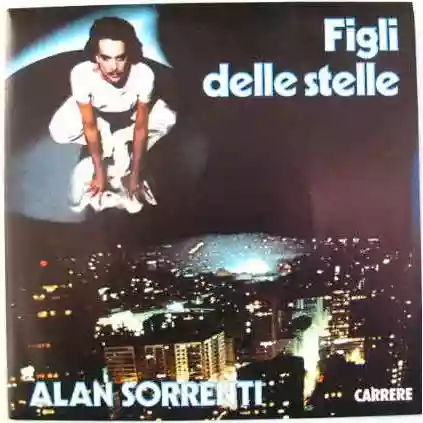
I write this brief review with a sly and somewhat roguish grin on my face; no, I have never listened to any of Alan Sorrenti's albums before this one (maybe I'll do it someday, maybe not, it all depends on my fickle spirit) and, yes, untouched by any possible preconception of any kind, I consider "Figli delle stelle" a great little vintage gem. Did he do it just for money? Did the record company impose it on him? Perhaps, probably. Did he do it well? It certainly seems so to me, and so the first two things, I'd say, in the end, don’t really matter.I like Italian pop when it is Italian in style and not just in the language of the lyrics, and with "Figli delle stelle" this polyhedral Welsh-Neapolitan artist, for the occasion equipped with an impeccable pair of sparrowhawk mustaches, was able to rework the disco sounds of the time in a very elegant and intelligent way. The "supporting" instrumentation essentially remains that of typical rock: guitar, bass, and drums + light synths, without the exuberance of horns, orchestrations, choirs, and various overdubs of contemporary Bee Gees or the Afro-American "school," and then there's Alan's fantastic voice, a stylish voice; light and pleasant like a good glass of fresh sparkling wine straight from the minibar. A languid, beautiful but deceptive piano intro, then that unmistakable guitar riff breaks in and you are perfectly immersed in the atmosphere, you feel like greasing your hair, putting on a flashy shirt and a pair of elegant jeans, letting yourself go to the flow of a Dionysian night, but never losing style. Alan Sorrenti is a great storyteller, take a particularly raunchy-themed piece like "Un incontro in ascensore", he weaves around it, narrating it with an almost disarming nonchalance, the same goes for "Donna Luna", but here the outlines become more dual, ambiguous: this languid outpour of sensuality, complete with a sax/sex solo, undoubtedly alludes to other pleasures, more artificial, just like in the case of the title track.
In short, "Figli delle stelle" is a display of finesse, for example the Brazilian suggestions in "Casablanca" (it sounds strange to say it like this, but so be it ...), or the use of the Neapolitan dialect in the languid and velvety "Passione", one of the most characteristic and fascinating tracks of the album thanks also to this "quirk," this personal touch; "C'è sempre musica nell'aria" is another pleasant surprise, a classy piece for piano and acoustic guitar with a crescendo finale, and it fits beautifully. The only sour note "Tu sei un'aquila e vai", a fairly opaque and less personal funk unnecessarily stretched to eight minutes in length; a conclusion that leaves a bit of bitterness in the mouth, truly a pity, something much more ambitious and in line with the rest of the album could have been ventured, it would have been perfection.
However, the essence of the matter remains the same; renewing oneself is sometimes the only way to survive, as taught by the Bee Gees with "Main Course," following the trends is part of the game, and Alan Sorrenti played it really well: he made "Figli delle stelle," the Queen made "Hot Space," and I'd say there's no contest, Alan wins overwhelmingly by manifest superiority. He did things right, like a true professional; Mercury and his bandmates scrambled like amateurs, with results that at times were good but, precisely, amateurish. At the time, someone might have, metaphorically or not, shouted at him in indignation, "sell-out, sell-out!!" shaking their fists in the air, I ideally shake his hand and think it would be a great thing if all the "sell-outs" were like him.
Loading comments slowly
Summary by Bot
This review highlights Alan Sorrenti’s album Figli delle stelle as a standout vintage disco record with elegant Italian pop elements. The instrumentation is tastefully simple, showcasing Sorrenti's distinctive voice and storytelling. Despite one less successful track, the album overall is praised for its finesse and stylish renewal of disco sounds. The reviewer appreciates Sorrenti’s professional execution and creativity in blending multiple musical influences.Tracklist Lyrics Videos
Alan Sorrenti
Alan Sorrenti is an Italian singer-songwriter (often described in reviews as Neapolitan and of Welsh origin) noted for an early progressive/psychedelic phase—especially the 1972 album 'Aria'—and later mainstream success with pop/disco hits such as 'Figli delle stelle' and 'Tu sei l'unica donna per me'.11 Reviews
Other reviews
By Valeriorivoli
"That evening sea breeze invades us like a huge hairdryer among our strands."
"The S-shaped arm of the player falls onto the grooves like a plow sows grain... bringing me back to the festive disco days of my adolescence."
