
 •
Rating:
•
Rating:
THE REVIEW
Alan Sorrenti is known to everyone for the hit "Figli delle stelle". But you should know that in his early days, our Alan adopted the rule of the three P's: Progressive, Psychedelia, and Pop. Never was such a combination more successful than in the song "Vorrei incontrarti", from his debut album "Aria", rich in dreamy and romantic atmospheres, which also characterized the more experimental suite of the same record.
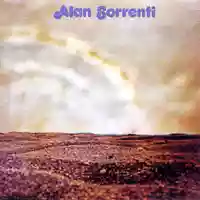
A year later, in 1973, Alan tries again to apply this formula to his songs, and out comes a new album, "Come un vecchio incensiere all'alba di un villaggio deserto" (a shorter title, no?), which, although full of interesting ideas, is far less successful than the first. And it is precisely this album that I am going to review today (please, don't make me say the title again!). First of all, I must say that this LP is more harsh and electric than the first (at least of the two pieces I know, forgive me, if you want you can lynch me!) and is composed of 7 tracks if we include the bonus track "Le tue radici", among which there is a suite.
It starts with the beautiful "Angelo", driven by almost tribal percussion and a psychedelic piano, which well accompany Sorrenti's obsessive voice. This is followed by the very famous "Serenesse", a piece that, according to many, is one of Alan's most successful, but which I find only a sordid pop tune, far from the evocative atmospheres of "Vorrei incontrarti". We return to more acidic and less syrupy sounds (although sweet and certainly not harsh) with "Una luce si accende", characterized by a violin that follows Sorrenti's voice entirely, consequently reaching quite high tones. In fact, Alan manages to mask well, especially with impeccable falsettos, his not exceptional (but still great) vocal range, striving as much as possible and spicing it all up with squeals and vocalizations. And here is my favorite track along with "Angelo", "Oratore", a combination of sharp strings and horns that very vaguely reminds me of "Hurricane" by Bob Dylan. After the dull "A te che dormi", the lengthy suite with the long title "Come un vecchio incensiere all'alba di un villaggio deserto". Ten minutes of pseudo-vocal improvisation, guitars, and synthesizers introduce the actual suite. As always, Sorrenti sings too much, and when it seems like he's about to finish, he continues singing in a rather tiresome manner. Then it ends, and we relax with the music: guitars, strings, and synths in a nice mix, which soon gives way to an almost folk rhythm that accompanies the voice and fades gradually to the end. Bearable, but nothing special.
A bit of disappointment after the very promising debut, but still a good album, still influenced by progressive. It's a pity that afterwards, Alan will sniff out the lure of the three S's: Stars, Strobes, and... Money. See you soon for another adventure (or misadventure) with Manliuzzo!
Loading comments slowly
Summary by Bot
Alan Sorrenti’s second album embraces progressive rock, psychedelia, and pop but doesn’t quite match the success of his debut “Aria.” The album offers a harsher, more electric sound across seven tracks, including a long, experimental suite. While some songs like “Angelo” and “Oratore” stand out, others fall short, making the album interesting yet somewhat disappointing for fans of his early style.
Alan Sorrenti
Alan Sorrenti is an Italian singer-songwriter (often described in reviews as Neapolitan and of Welsh origin) noted for an early progressive/psychedelic phase—especially the 1972 album 'Aria'—and later mainstream success with pop/disco hits such as 'Figli delle stelle' and 'Tu sei l'unica donna per me'.11 Reviews
