
 •
Rating:
•
Rating:
THE REVIEW
I decided to write this review after spending the night watching interviews on YouTube of the ''new'' Alan Sorrenti. No, I am not having it. Alan should be remembered for his genius and depth; perhaps he has denied his ''roots'', but we must not forget them.
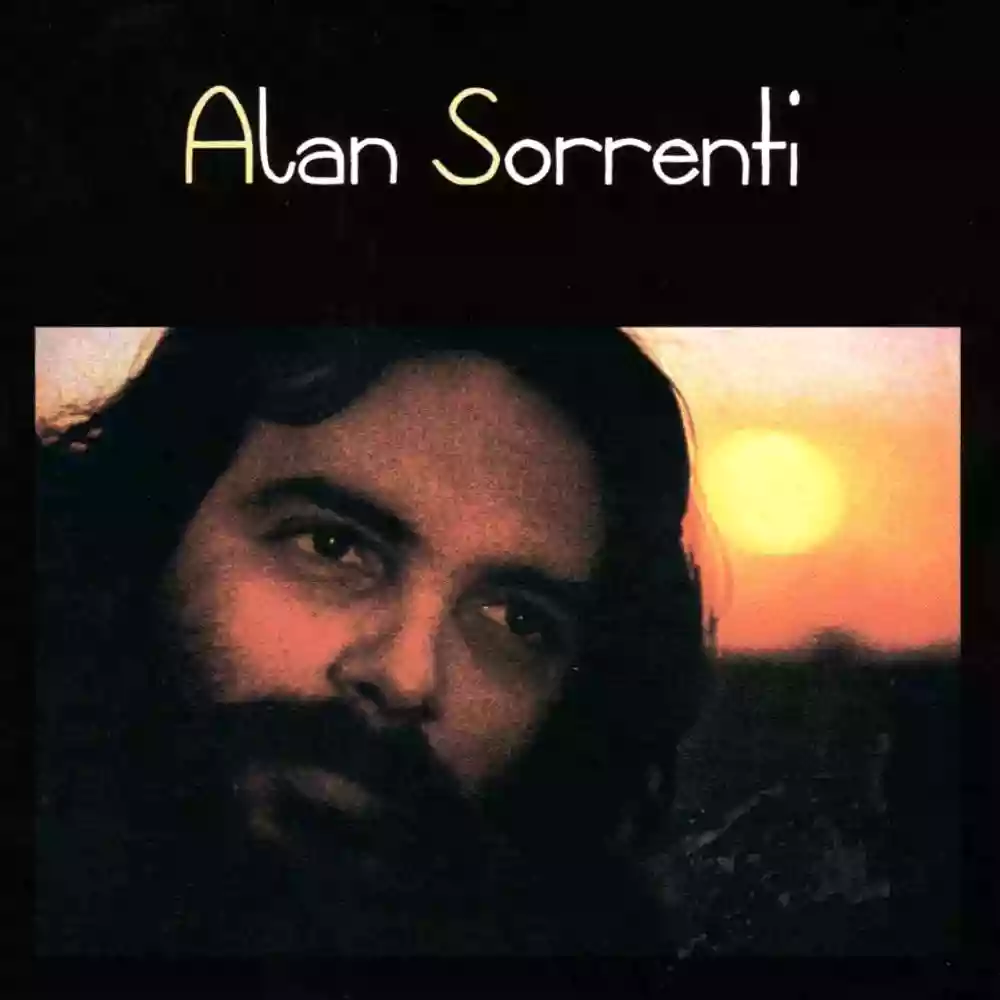
Alan Sorrenti is the great mystery of Italian music. Sadly known for easy hits like ''Figli delle stelle'' or ''Tu sei l'unica donna per me'', Alan is something else, much more. His first cry is the masterpiece debut ''Aria'', which has no equal anywhere in the world. A year later, it is followed by the excellent second album ''Come un vecchio incensiere all'alba di un villaggio deserto''. We are in 1974, the money isn't coming in, and Alan decides to partially change the formula by releasing his much-underrated self-titled album, boasting collaborations with incredible musicians like Tony Esposito on percussion. Although the pieces are still anchored in a progressive structure, the various experimental elements are softened to give way to a greater pop sensibility for songs without neglecting vocal virtuosity, the true trademark of Sorrenti. Alan's voice conveys an emotion and sensitivity matched in Italy only by Battisti and the more enlightened Graziani; it is transparent, it tells us everything about him, it opens to us as if we were his closest neighbor.
''Un viso d'inverno'' opens the show, where Alan's voice immediately transforms into an instrument that manages melancholy and serenity without excluding them from each other but completing them in a perfect structure. It is followed by a classic of Neapolitan song ''Dicitencello vuje,'' which proves that Alan is the greatest singer in Italy by making an immortal piece of Neapolitan music his own. In ''Sulla cima del mondo,'' he clearly tells us that he no longer wants to suffer; he wants to escape this malaise, perhaps in search of a more superficial and frivolous life that he will find shortly thereafter. ''Poco più piano,'' enriched by strings and winds, is a sweet and relaxing piece that leads us to ''Microfoni assassini,'' a classic hermetic Sorrentian text about an escape that will culminate in the concluding ''Incrociando il sole,'' where no one is more important, leaving only room for a symbiosis with your lover, almost an epitaph of the early Sorrenti, as he himself says knowing well what will come after: ''We are still together in the air crossing the sun''.
Thank you, Alan.
Loading comments slowly
Summary by Bot
This review highlights Alan Sorrenti's 1974 self-titled album as an underrated work fusing progressive rock with accessible pop sensibilities. The album showcases Sorrenti's emotional and virtuosic vocals alongside experimental elements softened for broader appeal. Key tracks like "Un viso d'inverno" and "Dicitencello vuje" demonstrate his mastery and sensitivity. The reviewer emphasizes Sorrenti's deep roots and artistic depth beyond his popular hits.Tracklist
Alan Sorrenti
Alan Sorrenti is an Italian singer-songwriter (often described in reviews as Neapolitan and of Welsh origin) noted for an early progressive/psychedelic phase—especially the 1972 album 'Aria'—and later mainstream success with pop/disco hits such as 'Figli delle stelle' and 'Tu sei l'unica donna per me'.11 Reviews
