
 •
Rating:
•
Rating:
THE REVIEW
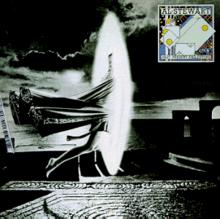
"My first four albums were an apprenticeship, this is my thesis": it's Al Stewart himself who says it; and, even though this statement may seem almost like a lack of self-esteem, especially when referring to wonderful albums like "Bedsitter Images" and "Zero She Flies" (miles away from the unwarranted arrogance of many phony superstars), it is essentially true. The commercial response is still modest, but "Past, Present And Future" is the first great masterpiece of maturity for Stewart, the first album centered on historical themes, with all the allure that can derive from this, especially for me, and an eclecticism that emerges with strength and inspiration. Unlike the airy sound with often American-like traits of its successors, "Year Of The Cat" above all, which would introduce him to a wider audience, PP&F presents a more reflective style, not as bitter as "Love Chronicles" and not as essential as in "Zero She Flies," but the folk-blues component is still present and rooted, enriched with new ideas and stylistic contaminations.
By choosing not to include an elegantly midtempo and divinely arranged song like "Soho (Needless To Say)" in "Orange," Al Stewart sacrificed the qualitative level of the 1972 album, however enriching "Past, Present And Future" with another fresco of picturesque urban life along the lines of "In Brooklyn" and "Electric Los Angeles Sunset," which ideally seems to represent the present in the general context of the work. The future, in turn, is expressed with the only other song on the album that deviates from historical themes, an absolute novelty for the stylistic range expressed so far by the Scottish artist: "Terminal Eyes", a courageous but counterproductive choice as a launch single, because it is a song with very little radio-friendly sound, making extensive use of vocal overdubs, keyboards, and strings, which create a bizarre yet original redundant sound full of echoes and reverberations, perfect for a visionary text loaded with unsettling metaphors and not easy to interpret.
Anyway, the album is titled "Past, Present And Future" not by chance, with the past coming first as the main source of inspiration: a rather recent past, still alive and carved in memory, that of "Post War World Two Blues" even lived in the first person; a beautiful song both in sound and concept, a classic folk rock with all the potential to become an evergreen: an autobiography and a personal artistic manifesto inserted in a broader context populated by iconic figures like Churchill, Eisenhower, Harold MacMillan, and Robert Kennedy. Of course, there are also more in-depth portraits of less known personalities like John Fisher, a hero of the English navy between the mid-1800s and early 1900s, honored with the evocative ballad "Old Admirals", enriched by brass that perfectly recalls the atmosphere of a sumptuous military parade, or "Warren Harding", a brilliant and amusing folk uptempo and sharp parody of the American dream, based on the vicissitudes of the namesake president of the USA from 1921 to 1923, known more for the embezzlements involving many members of his government than for his political action. The songwriter also turns his attention to Nazism, the fierce and cannibalistic one of the Night of the Long Knives, seen from a blurred perspective, like a distant flashback in "Last Day Of June 1934", a typical and elegant ballad of his, characterized by a wonderful emotionally climaxing finale, with a certain bitterness shining through: "The couples pass me by, they’re looking so good, their arms around each other, they head for the woods, they don’t care who Ernst Roehm was, no reason they should, just a shadow that hangs in the air", so Al Stewart sings about the inexorable fading of memory.
Nazism is also the central theme of the emblematic song of "Past, Present And Future," one of Al Stewart's greatest masterpieces, "Roads To Moscow", which depicts it in a much more vivid and direct manner in its most ambitious and titanic undertaking, leading to its inevitable fall: eight minutes of goosebumps, a narration accompanied by a tremulous and incessant mandolin and solemn, deep female choirs, a measured march where you can almost feel the icy winds and snow of the Russian winter, failure and ruin observed firsthand by the eyes of an ordinary soldier, who does not fully understand his orders and the reasons for the war, but who can describe better than anyone else the slow yet inexorable agony of defeat. The choice to close "Past, Present And Future" with "Nostradamus" is smart and fitting, and this folk ballad, which approaches ten minutes in length, much calmer than "Roads To Moscow," ensures a grand closure for a superb album: a lulling, dreamlike atmosphere, which slowly comes to life evoking the prophecies of the controversial French scholar: Napoleon, Hitler, Francisco Franco, the three Kennedy brothers, the Berlin Wall, and other mysteriously vivid omens.
This opens a great musical and thematic cycle destined to extend until 1980, the most well-known and commercially successful Al Stewart, who from then on will proceed by gradually refining the stylistic specifics of his music, in a well-defined and linear path and not with abrupt changes as in his early years. While it is true that the subsequent "Modern Times" will be his first significant commercial success, "Past, Present And Future" is the starting point for the mature Al Stewart, a forgotten masterpiece to be passed down to posterity.
Loading comments slowly
Summary by Bot
Al Stewart's album Past, Present & Future marks his artistic maturity, focusing on historical storytelling and rich folk-blues sounds. The review highlights its reflective style, standout tracks such as Roads to Moscow and Nostradamus, and its thematic depth. Although less commercially successful than later works, it remains a forgotten masterpiece that laid the groundwork for his future success. The album’s intelligent composition and evocative narratives make it essential listening for fans of folk rock.Tracklist Lyrics Videos
Al Stewart
Al Stewart (born 1945) is a Scottish singer-songwriter known for folk-rock and literate, history-infused storytelling. He broke through commercially in the mid-1970s, notably with the album and title track “Year of the Cat.”20 Reviews
