
 •
Rating:
•
Rating:
THE REVIEW
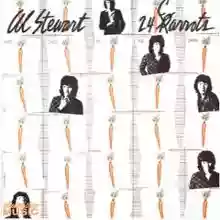
If we really want to stick to the boring, useless, and insignificant sales data, "24 Carrots" from 1980 is the album that marked the end of Al Stewart's brief and hard-earned stay at the top of various hit parades and also the conclusion of the very happy artistic partnership with Alan Parsons. However, listening to the album in question makes these two seemingly important premises appear as futile surrounding trivialities. "24 Carrots" crowns in grand style a cycle opened four years earlier with "Year Of The Cat" and splendidly continued by "Time Passages," offering one last flourish with this album, which has a much more markedly rock soul than its two predecessors, where the electric guitar is the predominant instrument—a (almost) novelty for Al Stewart, with the only prior instance found in "Love Chronicles" of '69—and, not least, it is often marked by engaged and political lyrics.
In "Love Chronicles," the renowned Fairport Convention were supporting Stewart, whereas for "24 Carrots," a brand-new band, Shot In The Dark, was formed, led by guitarist Peter White, already accompanying the singer-songwriter in previous years. The sound is slightly less enchanting and varied compared to "Time Passages" but solid, strong, and well-defined: a successful shift with absolute naturalness that represents, at the test of facts, an evolution of what had been expressed in the recent past rather than the beginning of a new phase, despite the already mentioned significant structural changes; "24 Carrots" features an Al Stewart still at the pinnacle of inspiration and well supported by the creativity of Peter White. The marvelous "Murmansk Run/Ellis Island", a double rock narrative with the sea as a common element, the convoys of ships loaded with allied supplies for the Soviet Union during WWII, at the mercy of the Arctic cold and U-Boats, and the diverse migrant humanity lost and laden with dreams and hopes upon arrival in America, and also the passionate Latin-rock of "Running Man", recalling the escape of Nazi war criminals to South America through the infamous ratlines, are rightfully among the most exciting and luminous episodes of his entire career.
Besides these two great peaks, the rock vein of "24 Carrots" pulses vigorously and flourishingly also in "Paint By Numbers", the first approach with electronics, both a blessing and a bane for Al Stewart in the '80s, and "Constantinople," where the Turkish occupation of northern Cyprus is recalled, episodes characterized by brilliant and incisive bluesy guitar work, in the elegant ballad and AOR-influenced single "Midnight Rocks" and in "Mondo Sinistro", a delightful and ironic little rhyme very groovy and danceable. Despite everything, Al Stewart does not forget, never will entirely forget his folk roots, thankfully: the poignant and majestic atmosphere of the Tolkienian vision "Merlin's Time" is something breathtaking, and the Celtic waltz of "Rocks In The Ocean" gently lulls the listener towards the end of the album, marked by the fascinating "Optical Illusion," a melody in the style of "Year Of The Cat," refined, light, and seductive.
Working within the capacity limits of vinyl has undoubtedly represented a great challenge for musicians, nowadays many albums are watered down, ruined by excessive and self-indulgent durations, the ability to "cut the dead wood" has somewhat been lost, and perhaps also the capacity for self-criticism: you might say, but what does this have to do with "24 Carrots"? It does because, in this case, the opposite is true; three beautiful songs were cut from this album: the brilliant piano-rock of "Here In Angola," a sumptuous and charismatic, distinctly '80s "Pandora," and the orchestrated and dreamy momentum of "Indian Summer," which in the refrain almost echoes Dylan's "Romance In Durango," included instead in a reissue in 1994. This further demonstrates the state of grace of the Scottish singer-songwriter, never again so inspired for the following twenty-five years.
Loading comments slowly
Summary by Bot
24 Carrots is Al Stewart's 1980 album that closes his peak era with a strong rock influence and political themes. Supported by new band Shot In The Dark, it evolves from previous works while maintaining folk roots. The album features standout tracks like Murmansk Run/Ellis Island and Running Man, showcasing brilliant storytelling and musicianship. Despite some songs initially cut due to vinyl limits, 24 Carrots remains a high point in Stewart's career.Tracklist Lyrics Videos
Al Stewart
Al Stewart (born 1945) is a Scottish singer-songwriter known for folk-rock and literate, history-infused storytelling. He broke through commercially in the mid-1970s, notably with the album and title track “Year of the Cat.”20 Reviews
