
 •
Rating:
•
Rating:
THE REVIEW
«Even simplicity has the right to exist» (Albano Carrisi)
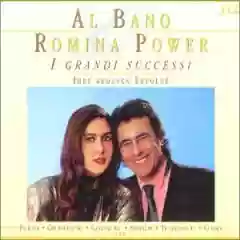
Hello everyone, sorry for the perhaps unconventional start to my review, but this phrase, overheard during a TV interview with Al Bano conducted by the talented (though somewhat self-indulgent) Antonello Piroso, made me reflect on the musical value of the Apulian singer's work, providing me with the opportunity for one of my usual forays into Italian music, the so-called "minor" music, of the late '90s.
I decided to talk with you, and for you, about Al Bano & Romina, a couple in both life and art for nearly three decades, often mocked for the sugary nature of their songs, their media representation, and then, unfortunately, swept away by life's tragic events that shattered what seemed to be a beautiful dream: the humble and willing Italian artist from a poor province on the edges of the empire, marrying the rich heir of the Hollywood upper class (indeed: truly beautiful at the time), building a solid and united family that seemed to realize the Mulino Bianco dream. But then...
Well, let's put aside the sadness and reflections on the meaning of life, which don't suit my usual forays, and let's dive into the analysis of the style of our (former) duo, through one of their classic collections of hits.
When Al Bano describes his music as "simple," he speaks the truth, and he says it with precise intention: melodic pieces, with solid roots in Italian tradition, well leveraged by his tenor voice and the lyricism typical to it (technically, the singer from Brindisi has it); lyrics that speak of common emotions, feelings that each of us experiences throughout the day, filtered through a light, sometimes poetic, sometimes mildly rhetorical, that often even we embrace, perhaps without having the courage to admit it to others; simple arrangements that do not overpower the songs but emphasize the strength of the lyrics. Romina's voice in this context appears secondary, as she is not a true singer per se: however, her stage presence (live) and vocal accompaniment (on albums) with Al Bano's wife had and still has today - despite the passing time - an almost symbolic character, representing the union of male and female, the merging of spirits, the universality of the stories narrated. Sometimes beautiful, sometimes not, just like anyone else.
Among the best pieces of the duo, contained in the album under review, I would point out, for illustrative purposes, "Libertà", with its hopeful yet bitter lyrics, and the famous "Ci sarà", where the tones become more optimistic, almost arching between the past (tradition) and the future (the hopes narrated here). Perhaps weaker, but equally well-known, is "Felicità", although it also describes in a few simple touches the life of the ordinary man and the joys of simplicity alluded to by Al Bano in the previously mentioned interview. Ecological tones, the result of a panic love of nature deriving from Al Bano's peasant roots and Romina's hippie branches, in "Cara terra mia", with its elegant melodic flow.
Some often find this way of being and singing to be cloying, highlighting, on the one hand, the lack of novelty in Al Bano's musical proposal and, on the other, a certain antipathy towards the persona, and perhaps even his partner, whose exploits seem to belong, indeed, to another century. Moreover, in their populist nature, their texts risk trivializing reality and the problems connected to it, excessively vulgarizing the message.
These statements are partially truthful; however, I believe the phrase placed at the beginning of my review explains the right approach to this music and the proper way to interpret the duo or even Al Bano's solo career and life: simplicity understood as sincere expression of one's emotions, as honest expression of one's artistic qualities, as immediate contact with the public, especially the more popular audiences and their tastes. Simplicity as the absence of overlays (here the proletarian inspiration of the character emerges, at least in relation to his origins).
Let us also consider that in the early '80s, in an Italy both distant and close to today's, many appreciated the songs of this anthology, identifying with them, or dreaming of doing so, and with the duo who sang them: which, mutatis mutandis, is what happens, at different latitudes - but in the same longitude - with Gigi D'Alessio and Anna Tatangelo, a modern, free, non-institutionalized version of Al Bano and Romina.
In summary, a story, both human and musical, that deserves respect and that, for better or worse, aptly describes our world. The rating is a consequential, perhaps even unnecessary, appendage to this reflection.
Respectfully yours,
Il_Paolo
Loading comments slowly
Summary by Bot
This review explores Al Bano & Romina Power's album 'I grandi successi' with respect for their simple, emotional style rooted in Italian tradition. Despite critiques of their sugary image and straightforward lyrics, the duo’s music resonates with popular audiences through sincerity and melodic strength. Their songs balance hope, simplicity, and cultural reflection, making the duo a lasting symbol in Italian pop. The author encourages appreciating their work beyond superficial judgments.Tracklist Lyrics
Al Bano & Romina Power
Al Bano & Romina Power are an Italian pop duo formed by singer Albano Carrisi and American-born actress/singer Romina Power. Active mainly between 1975–1999 and reunited for concerts from 2013, they scored European hits such as Felicità, Ci sarà (winner of Sanremo 1984), Sharazan and Sempre sempre, and represented Italy at Eurovision in 1976 and 1985.02 Reviews
