
 •
Rating:
•
Rating:
THE REVIEW
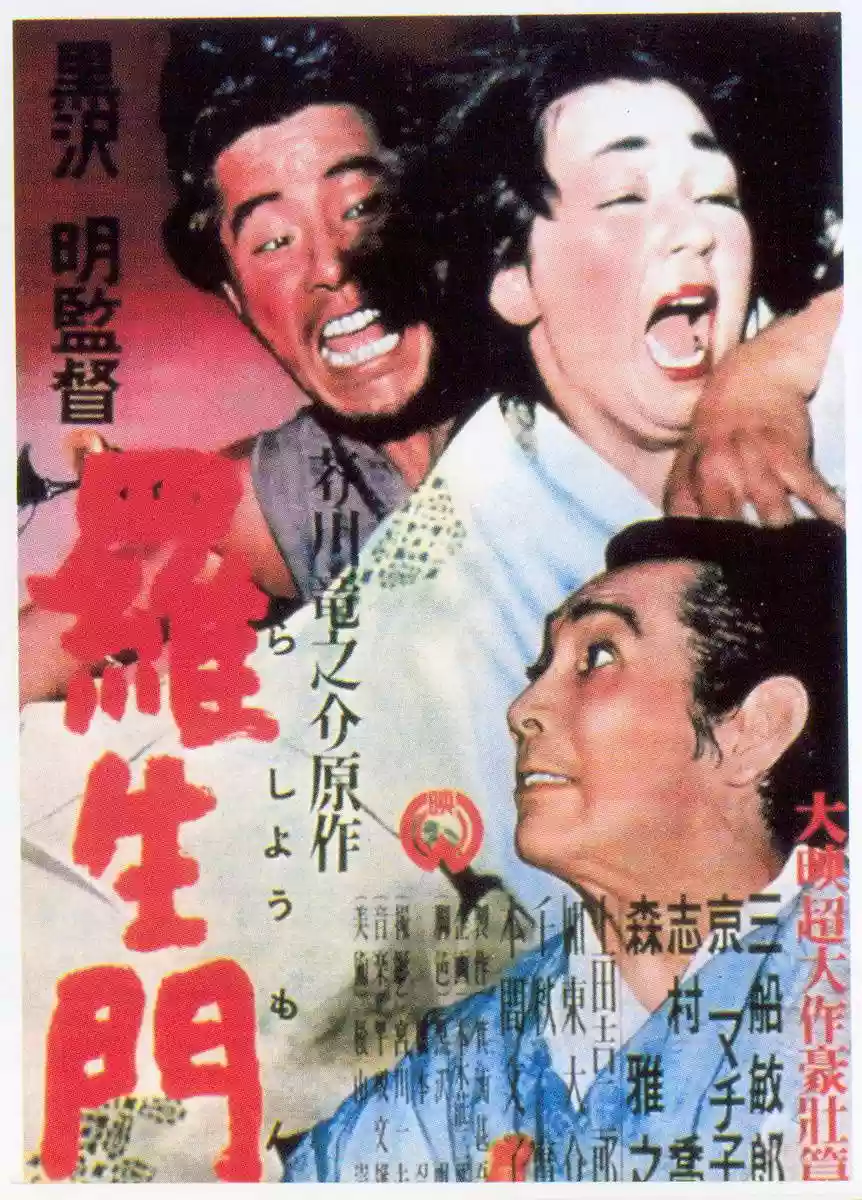
Among the cornerstones of film history that revolve around the originality of narrative structure, Akira Kurosawa's 12th film, which was futilely imitated many times, was released almost by chance beyond Japan's borders. It became the starting point for Kurosawa's worldwide success (and that of his actor alter-ego, Toshiro Mifune) as well as for Western interest in Japanese cinema, which had been virtually overlooked until then. By adapting two medieval stories by Ryunosuke Akutagawa (1892-1927), Kurosawa brilliantly restarted the cinematic narrative hypothesis experimented by Orson Welles in 'Citizen Kane.' It is a quest for mystery through a series of different, even contradictory, testimonies that relativize to the point of deeply questioning the concept of truth. Thus, the story revolves around a "mystery": in 13th-century Kyoto, devastated by civil wars and poverty, the bandit Tajomaru (Toshiro Mifune) is accused of raping a woman and killing her samurai husband. A priest, a woodcutter, and a passerby discuss what happened, each presenting different versions where they take responsibility for the crime but also attribute it to the other two. The protagonists of the story also participate in the discussion (the victim is made to speak through a medium's voice), but it is in front of the city gates, ravaged by a "biblical" flood, where a fundamental event occurs that unravels the story. With its extraordinary narrative construction (which assumes the audience is both detective and recipient of the investigation), Kurosawa's original sensibility (anticipating by about a decade the radicalism of the "multi-faceted" storytelling of Alain Resnais' 'Last Year at Marienbad'), his enthusiastic inner dynamism of direction (406 shots with extensive camera movements that chase, overtake, and encircle the characters without abandoning them for a moment), and the extremely precise performance of the actors, 'Rashomon' becomes the most fascinating "Rubik's Cube" cinema has ever offered, capable of satisfying both the grandiose needs of the masses and the needs of the soul and intellectual acrobats.
Loading comments slowly
Summary by Bot
Akira Kurosawa's Rashomon is a landmark film that revolutionized cinematic narrative by presenting contradictory perspectives on truth. Adapted from medieval stories by Ryunosuke Akutagawa, it showcases exceptional direction and acting, especially by Toshiro Mifune. The film's intricate storytelling and dynamic camera work create a complex mystery that has influenced generations of filmmakers. Its success launched Kurosawa’s international fame and opened Western audiences to Japanese cinema.
Akira Kurosawa
Akira Kurosawa (1910–1998) was a Japanese film director and screenwriter. He directed influential films across multiple genres, including period samurai epics and modern dramas, and achieved major international recognition with Rashomon.11 Reviews
Other reviews
By Wiserson
"Each testimony has the characteristics of the person recounting them, or rather, the peculiarities that the narrators would like to have."
"Even cinema and its images lie, and often, what we see with our eyes is not reality, but a clever artifice."
