 •
Rating:
•
Rating:
THE REVIEW
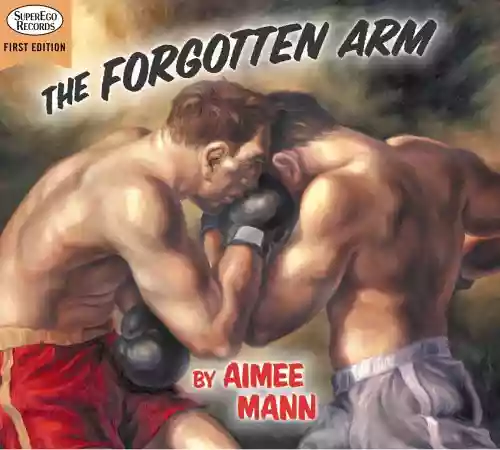
If originality and continuous, unlimited experimentation are what immortalize an artist in history, then very little will be remembered of Aimee Mann's efforts in a few generations. A solitary, reclusive singer-songwriter, rooted in a style brimming with citations and references to other eras, this blonde forty-something from Virginia may never be able to create an immortal masterpiece, but she has certainly been capable of stringing together, one after another, small gems of elegant pop songwriting. The Forgotten Arm is no exception, although it is inferior to anything she has produced to date.
I don't intend to curb my verbosity when addressing the description of the work in question. It's first important to note that this is a concept album, a format our artist seemed to have been courting for some time (see the beautiful and thematically nearly uniform Lost In Space), and it tells the love story between the boxer John and Caroline, a Southern girl victim of boredom and routine. The two meet in the early 1970s at the Richmond fair ("Dear John") and embark on a journey across America to escape the dullness of the provinces. However, since this is an Aimee Mann album, it's fair to assume that something might not go right, that the magical mechanism of love stumbles, and the two heroes are forced to part ways once more: indeed, this happens by the third song, when John leaves Caroline ("Goodbye Caroline") to detox from alcohol and drugs. After all, the prospects weren't the best: as the storyteller says in the tear-jerker ballad "King Of The Jailhouse", the two relied on each other because they thought that "sharing the load could lighten its weight." They are also two drifters, two losers, clinging to each other like castaways to the remains of a boat to avoid sinking, driven into each other's arms by infinite love but equally infinite fear of not making it alone. From this point on, the narrative becomes more fragmented and uncertain; Aimee seems to lose sight of the plot, forgets the intertwining, and indulges in the careful description of the two characters, which she carves with unprecedented involvement and attention. This is the main asset of the album, thanks to the tender and compelling realism that Aimee pours into her lyrics. The lyrics alone would justify purchasing the album: a few brushstrokes and you can understand John's discomfort, resigned to the horror of his addiction
"I'll pour the drink like a true believer
Whose God never blinks..."
("I Can't Get My Head Around It")
And Caroline's pain is real and palpable as she realizes she can no longer react to the relentlessness of events and has no way of helping her partner ("Was I the bullet or the gun?" from "I Can't Help You Anymore"), reconstructing the stages of their story (in the other piano ballad, perhaps the best on the album, "That's How I Knew This Story Would Break My Heart"). Equally solid are the two final compositions, where the ultimate triumph of love takes shape. It's not a happy ending without uncertainties, however: "Why does it hurt me to feel so much tenderness?" Caroline asks in the final song. And it couldn't end differently, considering the signature the album carries.
Musically, the protagonists' stories are narrated through a style that faithfully cites the clichés of a certain rock from the era in which the story is set: the almost omnipresent boogie of the piano, Hammond organs, rough and pulsing bass, a wealth of guitar solos. Joe Henry's clean production, however, tends to excessively flatten the album's insights: Mann's songwriting (in a strictly musical sense) needs lively and baroque settings to enchant, here it reveals itself to be elegant but substantially monotonous and somewhat convoluted. Tracks like "Video", "She Really Wants You", and "I Can't Get My Head Around It" are too similar to one another, and the fact that in the track list they are one after the other certainly doesn't help avoid the album's center being swallowed by a black hole. Perhaps the masterpiece of the album is the folk lullaby "Little Bombs", and it's significant that it is also the least "Aimee-Mann-esque" track of the work. While it was almost obvious that the bittersweet lyricism of the previous Lost In Space would evolve into a concept album, one is nonetheless forced to contend with a work undoubtedly refined and worthy of respect, but monochromatic and repetitive, intriguing and engaging, but not staying in memory, nor perhaps surviving the passage of time.
Loading comments slowly
Summary by Bot
Aimee Mann's The Forgotten Arm is a refined concept album telling a 1970s love story marked by addiction and hope. While lyrically rich and emotionally compelling, the music tends to be repetitive and somewhat monotonous. The album showcases Mann's signature elegant pop songwriting but doesn't quite reach the lasting impact of her previous works. Despite its flaws, it remains an intriguing and respectable effort.Tracklist Lyrics Videos
Aimee Mann
American singer-songwriter from Virginia and former ’Til Tuesday frontwoman. Gained wide recognition with the Magnolia soundtrack (including the Oscar-nominated Save Me). Known for literate, melancholy pop and independent releases on her SuperEgo Records, with acclaimed albums such as Bachelor No. 2, Lost in Space, and Mental Illness.06 Reviews
