
 •
Rating:
•
Rating:
THE REVIEW
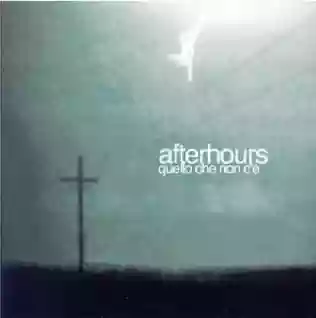
There are several merits attributable to this band from Milan. First of all, having a leader like Manuel Agnelli capable of creating a festival as impressive as Tora!Tora!, and able to produce other artists’ albums of a certain calibre, like the early works of what I believe is the only true Italian rock woman, Cristina Donà. Secondly, bringing to light the album regarded by many as the best in Italian music, the superb "Hai paura del buio?". Thirdly, reinventing themselves in style and immediacy in 2002 with the somewhat bewildering "Quello che non c'è".
This album was released three years after the underrated "Non è per sempre", an album few appreciated fully for its vaguely pop shift. Widowed from Xabier Iriondo, the Afterhours with this work begin to shape a new musical identity, yet remain faithful in various aspects to their origins, as we can see in the use of analog electronics and a constant melodic quest. However, changes are indeed present. Undoubtedly renewed are the atmospheres, much more psychedelic, and a major novelty is that almost all the lyrics on this record are credited to all the band members. The lyrics unexpectedly become more dark, intimate, but above all full of anger and extreme bitterness. Excuse the banality of this statement, but "Quello che non c'è" turns out to be definitely the most SAD album of Afterhours. The most resignedly desperate. Historic tracks of the group (and the most, if not the only, known by the general audience, those who are not specialists) like "Male di miele", "Non è per sempre", and "Strategie" are inseparably part of my childhood, they have made me become a great admirer of this group and have allowed me to appreciate their entire works. But if we talk about identification, if we talk about pure and burning emotional sharing, my point of reference can only be "Quello che non c'è". The allegories present in previous works fall away, leaving room only for immediacy, raw and sharp, and for protest, be it social or individual. It is impossible not to be captivated by the brilliance of pieces (including references directed at Emidio Clementi) such as "Varanasi baby" and especially "Bye Bye Bombay", six minutes and more of fascinating atmospheres and authentic psychedelia, even if my favourite piece remains "Ritorno a casa", a song in the style of Massimo Volume that from the first listen is the most anomalous piece of the entire project. Perhaps only halfway through the track "Non sono immaginato" and the title track "Quello che non c'è".
A STAB IN THE STOMACH.
I leave you the lyrics of "Sulle labbra", a direct protest against the (un)conscious hypocrisy that characterizes the human race and, if you will, also against intellectual homogenization.
Your spring is a nightmare
where the state succumbs to pornography
nothing and nothing to distinguish
until you no longer know what to feel
you think you have a creed
then you adapt it to what you are
and how can my love be clear
if it is my nation that pollutes it
I know how a man must decide
but now I no longer know what to feel
you find yourself on the lips
justifying who you are
even hating is a right, you know?
your spring is a nightmare
to disobey acquires an extra meaning
Loading comments slowly
Summary by Bot
Afterhours' 2002 album 'Quello Che Non C’è' marks a dark, intimate, and psychedelic shift in their style. With multi-member lyric contributions, it presents raw emotions and social protest. The album is considered the band's saddest and most direct work, featuring standout tracks like 'Varanasi baby' and 'Bye Bye Bombay'. It's a powerful and resounding step in their evolution, captivating fans with its immediacy and bitterness.Tracklist Videos
Afterhours
Afterhours is an Italian alternative rock band from Milan led by Manuel Agnelli, active since the mid-1980s and widely cited as influential in the Italian indie/alternative scene.52 Reviews
Other reviews
By nadir
His departure allowed both a reassessment of the situation and a fresh start with new enthusiasm.
For the first time, the group abandons irony... and in comes the thinly veiled melancholy that permeates the title track.
By killrockstar76
"If it weren’t for the really dull production, I would place it among the highest peaks reached by the Milanese group."
"Quello che non c’è is a Battisti from space odyssey and... it’s like listening to Bowie from the ’70s. The best Bowie!"
By the clash
‘Quello che non c’è’ is a completed art form to not push even further into the abyss and a hymn to lost hope but also an act of strength of great humanity.
It has the charm and power to awaken minds long, long numb.
