 •
Rating:
•
Rating:
THE REVIEW
Afterhours are accustomed to earthquakes, and recently they've gone through several.
The departure of Ciccarelli (guitar) and Prette (drums), replaced respectively by Stefano Pilia (Massimo Volume) and Fabio Rondanini (Calibro 35) which, according to Agnelli himself, impacted the band so much that they came very close to disbanding ("I had practically left the group"). A previous album, “Padania”, beautiful but perhaps too overproduced and not focused enough (even though there was no shortage of memorable episodes).
Finally, the bomb that exploded just before the release of this new, double, “Folfiri O Folfox” (two types of chemotherapy treatments used by Manuel Agnelli's father, who then lost the battle to the disease): the frontman's participation as a judge in the new edition of X-Factor, which sparked irony and ferocity from the hardest and purest fans ("the alternative is your dad", a quote that perhaps hadn’t been so overused since 1997).
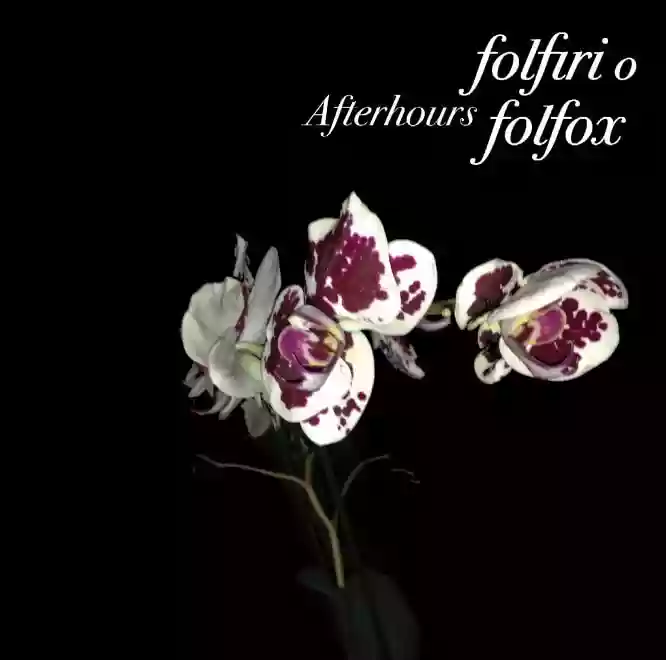
After all this, comes the new work which, let's be clear from the start to avoid any misunderstandings, is a great album. Probably the best release of the seminal Italian band since the times of “Quello Che Non C’è”, perhaps on par with the gem that was “Ballate Per Piccole Iene”. Definitely more focused than “Padania”, certainly qualitatively superior to the half-disaster of “I Milanesi Ammazzano Il Sabato”.
Being a double album of eighteen tracks, there's plenty of meat on the fire, and it can vaguely be organized into three different strands. There are the signature tracks of Agnelli and his associates: the two openers, one for each disc, for example. “Grande”, the first, is pure Agnelli distillation: the singing is anguished, shouted, visceral. The piece is a spare and incisive ballad like a dagger. The second, “Oggi”, veers into more delicate territories and is pleasantly enriched by the violin of the always incisive Rodrigo D’Erasmo. And then the first official single: “Non Voglio Ricordare Il Tuo Nome”, which showcases a Manuel in stellar lyrical form, is a very radio-friendly ballad, but not for that reason sycophantic. It reminds us that Afterhours have been capable, and still are, of writing anthems like “Voglio una pelle splendida” without ever falling into the banal. Also part of this batch are the heart-wrenching “L’odore della giacca di mio padre”, more oriented towards a piano-ballad, “Noi non faremo niente” (a delightful guitar and voice piece, which provides a small glimpse of what a possible solo adventure of the charismatic frontman might entail) and the closing “Se io fossi il giudice”, an instant classic destined to become one of the cornerstone tracks of Agnelli and associates' discography.
The second strand, objectively less convincing, includes the typical abrasive stabs led by a well-performing Xavier Iriondo, though slightly struggling to sustain rock writing that is not always up to par. The first promotional release, “Il mio popolo si fa”, is unconvincing, undoubtedly aggressive but really not focused, as is “Fra i non viventi vivremo noi” (which seems to be lifted directly from “Padania”). Good instead are both the grunge of “Ti Cambia Il Sapore” and the pseudo-stoner (very Queens Of The Stone Age) of “Qualche tipo di grandezza”, along with the circular “Né pani né pesci”.
And then there are the experimental fragments that often slash through the album's material, as if thrown there specifically to open wounds to be healed: the title track is distressing, alienating. It starts on an obsessive percussive carpet, then slows down and regains vigor at the end. “San Miguel”, “Cetuximab”, and “Ophryx” tear apart song structures, drawing repetitive and chant-like soundscapes.
“Folfiri O Folfox” is an album that will be talked about a lot, due to its richness in content and the media exposure Agnelli will have from now on, inevitably shedding light on the band's production even from those who don’t know what we’re talking about.
For now, we enjoy the return to form of a band that, whether we like it or not, has made the history of Italian alternative rock.
Best track: Se io fossi il giudice
Loading comments slowly
Summary by Bot
Afterhours' double album 'Folfiri O Folfox' marks a strong comeback following important lineup changes and mixed reception of past work. The album blends visceral ballads, aggressive rock tracks, and experimental soundscapes. It stands as one of the band's best releases in years, reaffirming their place in Italian alternative rock history. The emotional weight behind the album's title adds depth to the listening experience.Tracklist Videos
01 Grande (04:27)
02 Il Mio Popolo Si Fa (03:50)
03 L'Odore Della Giacca Di Mio Padre (03:15)
05 Ti Cambia Il Sapore (03:15)
06 San Miguel (03:30)
07 Qualche Tipo Di Grandezza (03:22)
08 Cetuximab (02:21)
09 Lasciati Ingannare (Una Volta Ancora) (04:29)
10 Oggi (03:25)
11 Folfiri o Folfox (03:46)
12 Fa Male Solo La Prima Volta (04:03)
13 Noi Non Faremo Niente (03:04)
14 Nè Pani Nè Pesci (03:52)
15 Ophryx (01:54)
16 Fra I Non Viventi Vivremo Noi (02:12)
17 Il Trucco Non C'è (03:26)
18 Se io Fossi Il Giudice (04:06)
Afterhours
Afterhours is an Italian alternative rock band from Milan led by Manuel Agnelli, active since the mid-1980s and widely cited as influential in the Italian indie/alternative scene.52 Reviews
