
 •
Rating:
•
Rating: THE REVIEW
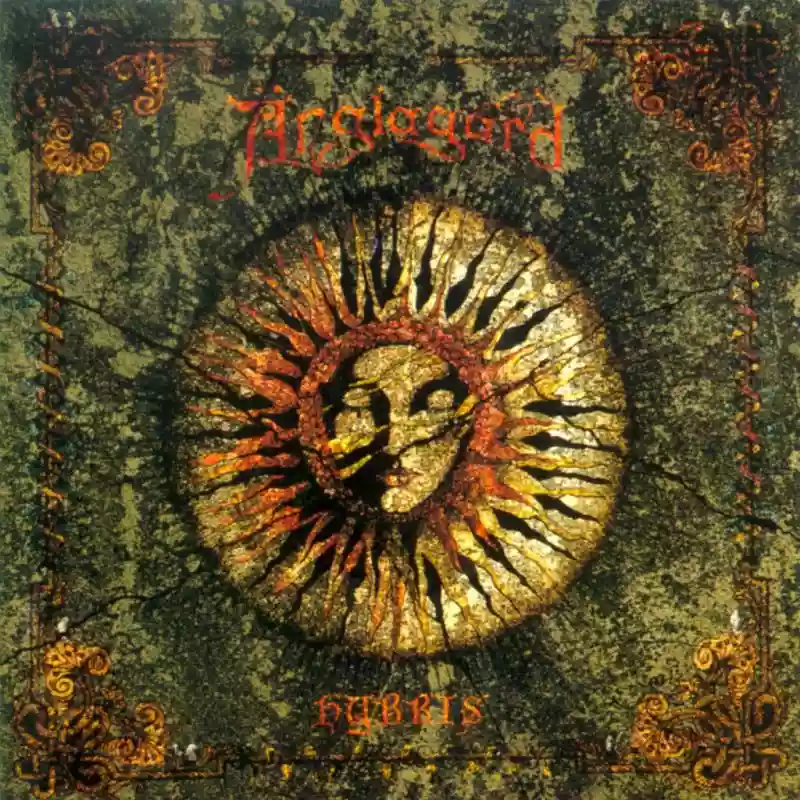
As a lover of progressive rock, I can only share with you or at least help you appreciate an album that I consider an admirable work of recovery, if it can be dubbed "philological," into the depths of the history of symphonic progressive (Genesis, Yes, and King Crimson); because this is what the Swedish Anglagard do in 1992 when they release this hidden gem named "Hybris."
It is their debut album even though this is not noticeable at all given the mastery that the 6 Scandinavians possess. The album is from the early '90s, but to a lover's ear, it could easily come from the pen of the most inspired '70s Fripp; however, let's be clear, our Vikings do not copy anything from the greats of the past, but they rework the symphonic-prog foundations in a completely original way, creating intriguing, passionate, as well as complex and elaborate sonic textures. Another factor that makes me adore "Hybris" is that you can savor the taste of a vintage sound reproduced by classic instruments such as the mellotron, the Hammond, the Rickenbacker bass, the Gibson guitars...
It starts with "Jordrok", a composition I consider extraordinary and for me the best of the batch; the piano intro, dark and at the same time melancholic, recalls the long Swedish winters and psychologically prepares the listener for a journey full of wonderful surprises. After about a minute, a Crimson-style guitar riff indeed explodes, sustained by powerful rhythms and keyboards in Tony Banks' style that could not be more prog; the song flows, taking us through more delicate moments with layers of mellotron and frippian arpeggiated acoustic guitars, folk interludes enhanced by Anna Holmgren's sweet flute, and again prog shifts with elegant and never trivial odd times and melodic embellishments.
The second piece "Vandringar I Vilsenhet" opens once again with a soft flute laid over a delicate mellotron, introducing folk-bucolic atmospheres here too complemented by top-notch instrumental performances, and for the first time, we hear Tord Lindman's delicate voice, decidedly suitable for the context; he sings in his native language, making his interpretation even more particular. The third piece, "Ifran Klarhet Till Klarhet", unfolds, after a few seconds of a playful circus tune, into an amazing prog break (a bit reminiscent of Dance on a Volcano) that leaves no room for replies, followed by other and quieter dreamlike paintings, painted by a fabulous synergy between the rhythm section (notably the bass), guitar, Hammond, building up to the ever more emphatic finale abruptly cut off at its climax almost as if to make room for the last grand pearl of the album. "Kung Bore" closes the circle, stunning the listener with the brazen juxtaposition of fabulous classical guitar plots and sections à la Focus/Yes, if you know what I mean. The drummer here recalls Bruford from "Larks' Tongues in Aspic," while the flute once again provides a nostalgic emotion to everything. From minute 6 to minute 7, it reminds me a lot of "Echoes" by Floyd in the passage before the final chorus.
Is this work to be considered a response to those who claim that prog is dead? Well, I definitely think that it should not be missing in any "progressive" collection worthy of respect; if you're just getting into the magic of this genre, the album is highly recommended to appreciate its essence.
Anglagard means "angel's garden", a name more than suitable for artists of such caliber.
Loading comments slowly
Summary by Bot
Änglagård's debut album Hybris is a remarkable symphonic progressive rock work that pays homage to '70s prog legends while delivering original, complex music. The album features vintage instruments like mellotron and Hammond organ, with rich, layered compositions. Highlights include the extraordinary track Jordrök and its blend of folk, classical, and prog elements. This 1992 release is considered essential for both longtime prog fans and newcomers.Tracklist Lyrics Videos
Änglagård
Änglagård is a Swedish progressive rock band renowned for intricate, dynamic compositions that blend Mellotron, Hammond organ, flute, and guitar into vividly Nordic soundscapes. The group’s acclaimed debut Hybris (1992) and its follow-up Epilog helped spearhead the 1990s prog revival. After periods of hiatus, they returned with the fully instrumental Viljans Öga (2012).05 Reviews
