 •
Rating:
•
Rating:
THE REVIEW
Born in Milan in 1938, the "Molleggiato" Adriano Celentano is still considered the most beloved singer by the Italian population.
Exaggeration? No, it's the truth. He appealed to the rebellious and avant-garde youngsters of the late fifties (notable was the social impact of "Il tuo bacio è come un rock"), he appealed to the right-wing ("Pregherò"), he appealed to the left-wing ("Il ragazzo della via Gluck"), he appealed to shy and lovestruck teenagers ("Una carezza in un pugno"), he appealed to moralists ("Mondo in Mi7a"), he appealed to conservatives ("Chi non lavora non fa l'amore"), he appealed to the elderly ("Sotto le lenzuola"), he appealed to the national-popular audience of the late seventies ("Ti avrò", "Soli"), he appealed to critics ("L'emozione non ha voce"). In short, whether you like it or not, Celentano has appealed to everyone a little.
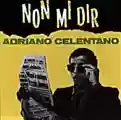
After a series of more or less haphazard albums ("Furore", 1962, "A New Orleans", 1963), Celentano delivers a sensational album with enormous commercial impact, not perfect but highly effective. It is "Non mi dir", an album produced, for the first time, by the Clan record label, founded, as is well known, by Celentano himself. The Clan is a kind of musical organization where a series of friends (Ricky Gianco, Teo Teocoli, Don Backy, Gino Santercole, Milena Cantù) coexist and try (or should try) to revive the American glories (but transported in an Italian sauce) of the famous Clan Sinatra (Frank Sinatra, Sammy Davis Jr., Dean Martin). Celentano is, inevitably, the Grand Boss of this important Clan: he makes the musical choices, he has the publishing rights, he is a kind of amatriciana Sinatra.
"Non mi dir" is a very clever album, full of choruses and grand ballads that are easily assimilable, rich in nonsense and explosive humor. There is everything in this first work produced by the Clan: self-referentiality ("Chi c'è l'ha con me" and, above all, "Uno strano tipo"); the wink at the less young generations more inclined to dedicate themselves to extreme sports like wild dancing in the ballroom ("Grazie, prego, scusi"), but above all there is "Pregherò", the Italian version of "Stand by me", a very famous mystic song resulting from a targeted commercial operation that tries (and succeeds magnificently) to revive the glories of religion and the Biblical Word. After all, Celentano has never hidden his unwavering religious faith. For almost a decade "Pregherò" would resound in all the parishes and oratories of Italy.
1965 is a golden moment for Celentano. Beloved by millions of teenagers throughout Italy, the Molleggiato is also making waves on television and in concerts thanks to his irresistible verve. "Non mi dir" represents this extreme, and well-deserved, creative apex: the rock'n roll that Adriano brings to Italy is in reality a simple and good-natured rock, far from the committed rock of Bob Dylan, a rose-tinted rock, a rock that would be defined as typically democristiano. Yet, there are many old-timers (especially the seventy-year-olds in love with Claudio Villa and Gino Latilla) who will blame Celentano for an excess of mischief and even vulgarity. A clear example of how in Italy, despite female emancipation and the right to freedom of opinion, we have always lagged behind and always done everything to boycott a certain type of culture, even musical, seemingly vulgar, but actually simple and good-natured.
Best to avoid unnecessary misunderstandings: "Non mi dir" is not a masterpiece, it lacks solidity, in some points it appears static and monotonous, Celentano sings well but, alas, plays rather poorly. Yet, despite a thousand flaws, "Non mi dir" withstands the wear and tear of time and appears, now more than ever, a precious musical artifact capable, better than any sociologist, of outlining the contours of an Italy seemingly very old but which instead, seen today, appears almost avant-garde. There is much to consider...
Loading comments slowly
Summary by Bot
Adriano Celentano's 1965 album 'Non mi dir' captures the essence of Italian pop-rock with clever humor and heartfelt ballads. Produced by the Clan label he founded, it reflects a unique blend of faith, cultural commentary, and accessible melodies. While not flawless, the album endures as a significant musical artifact and a reflection of Italy's social landscape of the time.Tracklist Lyrics
Adriano Celentano
Adriano Celentano is an Italian singer and entertainer known as “Il Molleggiato,” associated with bringing rock ’n’ roll into Italian pop and for a long career mixing hit singles with social commentary, television controversy, and film projects.27 Reviews
