
 •
Rating:
•
Rating:
THE REVIEW
Los Angeles, September 30, 1983, Adele Stephanie Sebastian dies of a severe form of kidney failure. She had just turned 27.
There is no happy end in this short story, although what remains is her first and only album, a gem that manages to touch the deepest strings of those who listen to it.
Before coming into the world, Adele certainly could not distinguish the notes, but she could feel them well, also because her mother worked throughout her entire pregnancy.
She was born into a family of musicians: her mother Jacquelyn was a pianist, her father Malvin a saxophonist, and her two brothers Joseph and Malvin Jr. singers. Predestined. Even as a child, she followed her mother who played with a choral group of Negro Spirituals, the Albert McNeil Jubilee Singers, which had a decent following throughout the country and is still active.
She grew up in a time when people fought for civil rights and against racial segregation—passionate years in which she breathed that ferment of expectations and disappointments, of repression and leaps forward. She grew up with the music of Pharoah Sanders and John and Alice Coltrane, but up to the early seventies, she was just a girl trying to find her own path. She studied flute and sang, and later, at California State University, she specialized in theater and deepened her pan-African interests.
Unfortunately, she already had to undergo dialysis due to a damned congenital disease. This didn’t prevent her from mixing with jazzmen and musicians, among whom the legendary alto saxophonist Frank Morgan and pianist Horace Tapscott, who welcomed her into his Pan Afrikan Peoples Arkestra at just sixteen years old.
This was a group that would deserve a separate discussion, but I will just say it was inspired by the Sun Ra Arkestra, and although Tapscott had a leading conceptual and organizational role, it was not based on just one person and his aesthetic vision, but rather, as they said at the time, a community project composed of a number of musicians, each with a very strong personality. Tapscott and the other members of the Pan Afrikan Peoples Arkestra believed their mission was to create and develop in Los Angeles a network of radical young black artists and to spread jazz and other forms of African American art into the public popular consciousness.
But let’s get back to Adele. She contributed to as many as eight Arkestra albums as a flutist and singer and she gained more and more respect from the other musicians and from Tapscott. But she was not only a very talented flutist; she was also a composer and was co-author, director, and choreographer of a musical on African American history titled “It’s a Brand New Day.”
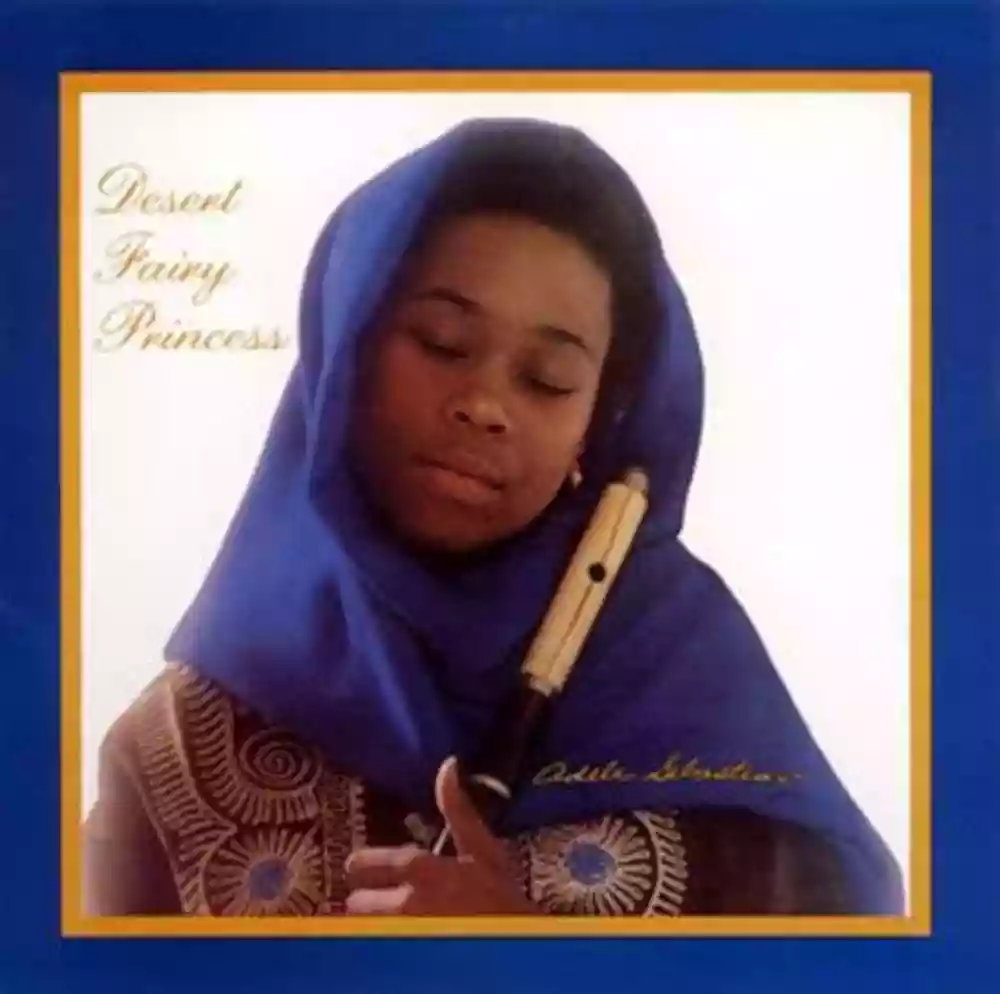
Meanwhile, she was working on her debut album, “Desert Fairy Princess,” which was recorded in 1981 and released the following year by the much-admired Nimbus West Records. She had put together an excellent band including vibraphonist Rickey Kelley, double bassist Roberto Miranda, and drummer Bill Higgins, who also plays the gembreh, a bowed instrument that gives the record a certain exotic flavor; pianist Bobby West and percussionist Daoude Woods.
Adele chooses to use mostly acoustic instruments in order to search for the most natural and spontaneous sound possible. The melodic lines intertwine, faintly echoing the Spiritual Jazz of Pharoah Sanders and Sun Ra from several years before, but she manages, with great intelligence, to make elements of classic American vocal jazz coexist with others closer to Free Jazz, Latin music, and African tribal sounds, as in the long, powerfully rhythmic “Man From Tanganyka,” a beautiful reinterpretation of McCoy Tyner's piece.
All the other tracks are also full of psychedelic hints and steeped in magical soundscapes, from the title track to “Prayer for the People,” “Belize,” and “Day Dreamer.”
The album, appreciated by critics, did not achieve great public success—it wasn't even expected. Success was not the aim; this was music that came from her soul, and she felt it could be a sort of spiritual testament.
The following year, she was gone. Who knows what she could have achieved!
The album was later carefully remastered and rereleased in vinyl and cd in its present form and, according to some critics—for what it's worth—will remain in the history of Jazz and music.
Ajò
Loading comments slowly
Summary by Bot
This review evaluates Adele Sebastian's Desert Fairy Princess album, examining its musical approach and artistic quality. It provides a balanced assessment with a rating of 3 out of 5. The commentary touches on the album's place within jazz and highlights its unique elements. The review is informative for jazz enthusiasts and newcomers alike. Readers get a concise perspective on Adele Sebastian's artistry.
Adele Sebastian
American jazz flautist and vocalist from Los Angeles, associated with Horace Tapscott’s Pan Afrikan Peoples Arkestra. Her sole album, Desert Fairy Princess (Nimbus West, 1982), blends spiritual jazz with free, Latin, and African influences. She died in 1983.01 Reviews
