
 •
Rating:
•
Rating:
THE REVIEW
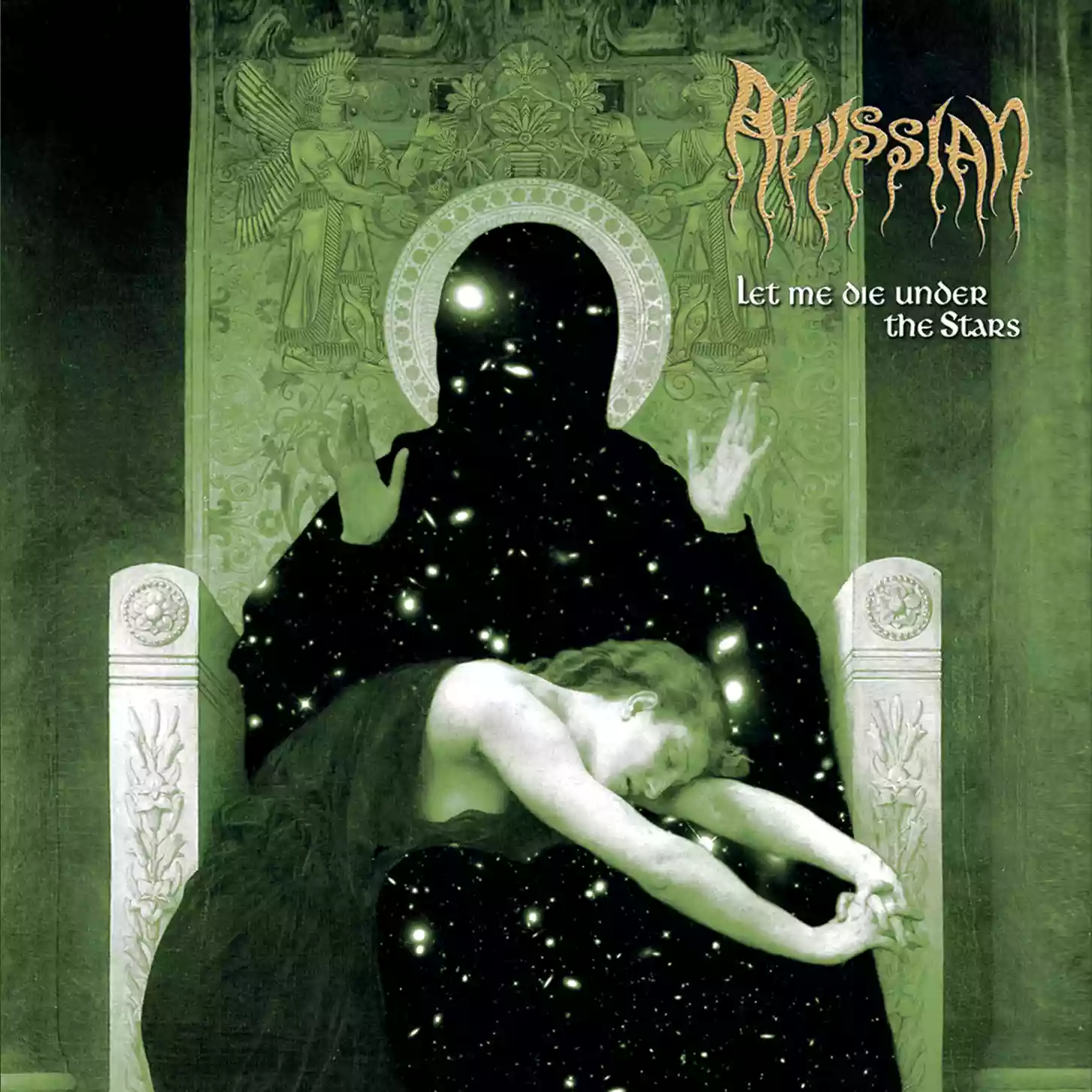
The Abyssian come into 2026 with Let Me Die Under the Stars as if emerging from a deeper layer of the very abyss they've always summoned. Here, doom is no longer just slow or atmospheric: it has become something sedimented, like wet rock that still breathes.
The sound is more compact than before, with less cosmic dispersion and more sonic mass. The guitars don’t “riff” in the classic sense: they dig. They are slow, abrasive walls that open and close like fissures under pressure. The drum machine and the real drums still coexist, but not as an obvious stylistic choice: more like two entities that have never truly fused, and that’s precisely why they work. There’s always that not-quite-human heartbeat under everything. Compared to Godly, here some of the “open” melodic component is lost and density is gained. The tracks seem less written to be remembered and more to be endured. Umberto Vono’s vocal lines are less narrative and more ritualistic: they do not lead, but evoke. At times, it almost feels as if the voice comes from a level below the music, not above. The imagery remains that of classic Abyssian—sunken civilizations, ancient gods, Nibiru, Sumerian echoes—but now it’s no longer a frame: it’s as if everything has already collapsed. You’re not listening to the story of an abyss—you are inside the abyss after the collapse. There are moments when the tracks open up, but not to “breathe”: to make you lose your bearings even more. No real climax, few concessions. This is a record that works more through pressure than through dynamics.
It’s not an easy album, nor does it seem to want to be. It’s the kind of work that doesn’t ask for your attention: it takes it from you.
And in the end, you’re left with this pretty clear feeling: Let Me Die Under the Stars doesn’t close anything or open anything. It just keeps digging in the same spot, but a bit deeper than before.
Loading comments slowly
Summary by Bot
The review offers a positive evaluation of Abyssian's 'Let Me Die Under the Stars,' awarding it a strong rating of 4 out of 5. The album's musical quality and atmosphere are highlighted, making it a recommended listen for fans. The analysis captures the core strengths of the release. The review is concise and focused on the album's artistic merit.
ABYSSIAN
ABYSSIAN is a doom-focused project known for dense, pressure-driven compositions that blend drum machine with live drums. The 2026 album Let Me Die under the Stars features ritualistic vocals by Umberto Vono; earlier material includes Godly.00 Reviews
