
 •
Rating:
•
Rating:
THE REVIEW
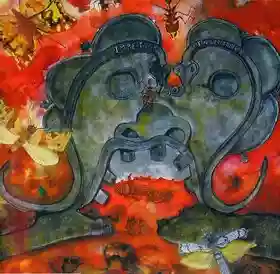
Impetus Insectorum is one of those albums that seem to exist in a liminal dimension: not only because of how it was produced, but also for its very artistic identity, suspended between a past and a rebirth. Attributed to Abiogenesi, the work actually establishes itself as a creative crossroads, where different souls converge — particularly that of No Strange — giving life to a hybrid, fascinating, and deeply evocative opus.
The story of the album is significant in itself: independently produced by Tony D'Urso and recorded entirely at home with analog equipment, Impetus Insectorum starkly contrasts with previous productions associated with Black Widow Records. Here, there’s no ambition for classic prog in its most structured form, but rather a more intimate, almost ritualistic sonic exploration that leans towards a psychedelic and spiritual realm.
The sounds, in fact, move away from the most orthodox progressive matrix to embrace a mystical universe, enriched by the presence of instruments like sitar and tablas. This bestows upon the album an exotic and meditative aura, echoing both the more esoteric digressions of early King Crimson and the occult atmospheres of Britain’s Black Widow. However, the album goes beyond simple citation: it reinterprets these influences in a personal key, with an almost handcrafted approach that heightens its allure.
The contribution of the musicians involved is also fundamental: beyond the D'Urso brothers, particular mention goes to the keyboards of Alberto Ezzu and Pino Molinari, whose presence creates a layered sonic fabric, made of reverbs, drones, and cosmic openings. The keyboards, in particular, play a central role in constructing soundscapes that seem suspended in time, more evocative than narrative.
From a conceptual point of view, Impetus Insectorum comes across as a kind of bridge: not just between two recording phases, but also between two artistic identities. The contractual bond with Giulio Tedeschi’s Toast Records, in fact, forced the project to hide under the name Abiogenesi, turning the album into a “hidden prelude” to the subsequent Cristalli Sognanti, which would mark the official return of No Strange thanks to the Psychout Records and Area Pirata labels.
In this sense, the album assumes an almost initiatory value: it’s a transitional work, but by no means a lesser one. Actually, it’s precisely its nature, free from production constraints and commercial expectations, that allows it to explore more daring and personal sonic territories. The result is an album that does not strive for formal perfection, but for atmospherics, for creating a mood.
Impetus Insectorum is not an immediate listen: it requires attention, openness, and a certain sensitivity toward more rarefied and symbolic sounds. But for those willing to immerse themselves in its world, it offers an authentic, almost hypnotic experience — a hidden gem in the history of Italian psychedelic rock.
Loading comments slowly
Summary by Bot
The review offers an insightful analysis of Abiogenesi's 'Impetus Insectorum,' praising the album's progressive rock style and musicianship. The reviewer gives it a strong 4/5 rating, highlighting its creative edge within the genre. Specific elements like sound and band performance are discussed with appreciation. This review serves as a helpful guide for those curious about modern prog. Overall, it's a positive assessment for fans and newcomers alike.Tracklist
Abiogenesi
Abiogenesi is an Italian progressive/psychedelic rock group associated with Black Widow Records. The reviewed Impetus Insectorum highlights a more intimate, ritualistic approach with analog home recording, sitar and tablas, and notable keyboard work by Alberto Ezzu and Pino Molinari; the project is linked to No Strange due to label constraints with Toast Records.01 Reviews
