
 •
Rating:
•
Rating:
THE REVIEW
The Middle Ages perceived, the Middle Ages experienced, the Middle Ages narrated: there are various ways to immerse oneself in a reality chronologically distant from ours, and each era has adopted its unique analytical approach; Romanticism celebrated its dark and fabled side, while Ingmar Bergman highlighted its contradictions, staging the ancestral purity of a hero from other times against the backdrop of a world devastated by irrationality and fear. Since historiography already fluctuates between objective goals and the subjectivity of the historian, what clarity should we expect from the work of art, which by nature is pure individuality mediated by the social context?
The answer is given by musical representations of the Middle Ages, a privileged path because it is not mediated by words: between the jester poetry of Gae Bolg and The Church of Fand and the childlike and visionary experiences of English progressive, the Austrians Abigor also occupy a rightful place, proponents of a black metal with strong medieval hues.
Let it be clear from the outset that this is neither an album for everyone, nor an album that even black fans will love without any doubt: thus any invitation to listen is open-ended, and you will understand very well whether it will be worth giving it a listen from the review you are reading (all this to counteract the trend emerging on the site that EVERYONE in the world should engage with extreme metal as a true source of knowledge...).
There has never been a lack of those in the black metal field who experimented with suggestions or elaborated medieval legends: think of the acoustic albums that have been rampant for decades, full of medieval mysticism, or all the concepts that draw from this period (I would say "Bergtatt" by Ulver summarizes both categories). Abigor, it must be said, remain anchored to the more instinctive and passionate side of composing lyrics and music: trying to explain the refined Emilian legends of Fearbringer or the delicate esoteric entanglements of Spite Extreme Wing to Abigor would be as futile as trying to teach Aristotelian metaphysics to an ox.
Anguish, anger, and despair are the only coordinates around which the group's conceptual universe revolves; nothing particularly innovative if we weren't talking about a group that has managed to convincingly blend extreme music with that deviant and mad spirit of the Dark Ages. Inhuman screams, frenzied scores, and unhealthy Thrash blend with ethereal madrigals, dreamy ballads, muffled acoustic guitars: as mentioned, any glimpse of refinement is unequivocally absent from these admirable pages, but the atmosphere of a brilliant oxymoron is already present in this first LP and will be the indelible mark of a short but significant career.
Medieval material and rough black metal thus intertwine in a more than appropriate manner; the geographical coordinates firmly keep the group within the Thrash/Black field: in this part of Europe, the Norwegian formula arrives with extreme delay, or is purposely ignored, adhering to the styles of the Magyar Tormentors of Attila Csihar or those of the Swedish Bathory. It's normal that during listening these are the names that come to mind, associating the album with a "minor" attempt (artistically more than historically) like "Deathcrush" by Mayhem. But the energy that overflows from tracks like "Kingdom Of Darkness" (with an introductory "Dies Irae" that terrifies) is unique, engaging, and decadent at the same time: it speaks of epic battles ended in tragedy, of forced conversions, of laments from prison towers.
In Abigor's world, there isn't a castle that isn't inexorably losing its mighty walls, there isn't a village lacking cripples, there isn't a street without flagellants and raging priests: existence in this world is so intolerable that the last weapon left to man is his voice; from this derives the absolute priority given to beastly screams, hysterical singing, thrashing, contorting. Abigor will later sing of the joys and achievements of Middle-earth, in albums labeled Summoning, but here there isn't even a glimmer of hope: the Middle Ages they speak of is here, it is today, without redemptions, without liberating Apocalypse, continuous, inexorable, perpetual, with televisions instead of jesters, exterminations via cable instead of epic poems, pedophile priests instead of... pedophile priests.
I almost might want to switch places...
Loading comments slowly
Summary by Bot
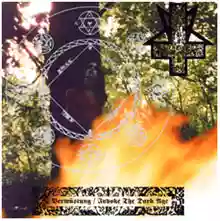
This review explores Abigor's 'Verwüstung / Invoke The Dark Age,' a black metal album deeply rooted in medieval themes and raw emotions. The music fuses thrash and black metal elements with an intense, desolate atmosphere. While not for every listener, it stands out for its passionate, brutal expression of despair and medieval chaos. The album’s energy and conceptual depth provide a unique and powerful listening experience.Tracklist Lyrics Videos
Abigor
Abigor is an Austrian black metal band formed in 1993, renowned for fusing ferocity with symphonic, industrial, and avant‑garde elements across a long, influential career.03 Reviews
