
 •
Rating:
•
Rating: THE REVIEW
"And I dream I'm an eagle
And I dream I can spread my wings
Flying high, high, I'm a bird in the sky
I'm an eagle that rides on the breeze
High, high, what a feeling to fly
Over mountains and forests and seas"
"Eagle"
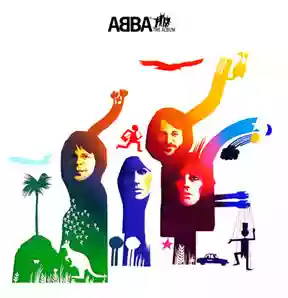
"The Album" follows a year after the highly successful "Arrival", but it has a very different genesis compared to the 1976 work. In fact, it starts as an initial idea for a musical by the Andersson-Ulvaeus duo, which is quickly abandoned and some of the songs written are then recovered to form the backbone of "The Album". With this record, the Swedish group once again demonstrates that they have an immense mine of ideas providing the raw material to craft yet another pop gem; their incredibly catchy music, despite the complexity of the arrangements and the unpredictable references, captivates audiences worldwide, particularly in Europe where the album easily reaches number one in the UK market.
With the opening track, "Eagle", the sound shifts towards that of the West-Coast with a solid rock soul that defines the power of a free-inspired song based on Richard Bach's "Jonathan Livingston Seagull", the song is a duet by Frida and Agnetha, a very beautiful track with excellent electric guitar parts and some nods to Ennio Morricone. "Take A Chance On Me" is a pop manual, that is, how to write the perfect song. It starts with the a cappella singing of Frida, Agnetha, and Bjorn marking the title, which in the sound sequence already has incredible musicality (the important role of the signifier, as McCartney teaches), and then the track, led primarily by Agnetha's voice, shifts towards a cheerful and progressive dynamic with disco digressions highlighted by Frida, a fresh and vibrant song. The third track in succession, "One Man, One Woman" is a ballad about couple problems sung by Frida, with an airy opening in the refrain where Faltskog joins in, sublime orchestration at the service of sound perfection that leaves one breathless. But here comes one of the most interesting songs from the quartet's repertoire, "The Name Of The Game" is a tribute to the Beatles in the chorus, the high trumpet, just like that of "Penny Lane", is recovered in its high sound to provide a backdrop to Agnetha's singing, with the main melodic part unraveling between funk rhythms and acoustic guitar textures and that "too too too" finale bringing to mind "The Long And Winding Road" by the four from Liverpool. "Move On" is a very interesting piece, opening with Bjorn's spoken part after an airy intro with flutes and a delightful piano note run, the background humming by Frida and Agnetha creates a beautiful effect that then leads to the song's folk opening. Different tones for "Hole In Your Soul", a driving rock'n'roll sung by Agnetha and Benny, a lively and engaging track. It closes with what remains of the old musical "The Girl With The Golden Hair". "Thank You For The Music" sung by Agnetha, with a tone reminiscent of Doris Day, is a song that fits into the old musical narrative featuring a girl and her aspiration to become a singer. Frida sings "I Wonder (Departure)", a complex song with orchestral arrangement, where you find yourself in front of a genuine musical piece interpreted with intensity and emotion, closing with "I'm A Marionette", a multiform jewel of beautiful craftsmanship.
"The Album" is a continual surprise, showing that the group was becoming increasingly aware of their potentials and the subsequent works will confirm the continuous progress. The ABBA were a great success group, but they are also among the most covered and, not to mention, the most cited in others' compositions, both legally and not, deserving to be known and listened to because their POP was cultured and of exquisite craftsmanship.
Loading comments slowly
Summary by Bot
'The Album' by ABBA, released after 'Arrival', showcases the Swedish group's rich creativity and musical craftsmanship. Starting as a musical project, the album offers diverse styles from rock to disco, with standout tracks like 'Eagle' and 'Take A Chance On Me'. The review highlights the complex arrangements, memorable vocals, and Beatles-inspired elements. This work cements ABBA's status as pop legends with a cultured and exquisite approach.Tracklist Lyrics Videos
ABBA
ABBA are a Swedish pop group formed in Stockholm in 1972 by Agnetha Fältskog, Björn Ulvaeus, Benny Andersson and Anni‑Frid Lyngstad. They won the 1974 Eurovision Song Contest with Waterloo, became one of the world’s best‑selling music artists, and are known for immaculate harmonies and studio craft. They were inducted into the Rock and Roll Hall of Fame in 2010 and returned with new studio recordings on Voyage in 2021.15 Reviews
