
 •
Rating:
•
Rating: THE REVIEW
Pop music wouldn't be what we know without ABBA. Considered one of the greatest, most famous, and important formations of the genre, they have sold about 375 million copies worldwide (Madonna, the most commercial artist of the last 13-14 years, has sold 280 million, trailing nearly 100 million), establishing one of the greatest commercial successes in music history, and becoming the largest, most widespread, and acclaimed phenomenon of their time: to understand who ABBA was, suffice it to say that in music history, ABBA-mania was second, in terms of fanaticism, intensity, and spread, only to Beatles-mania.
But, contrary to what many believe, ABBA was much more than just a hit-making machine: officially formed in '72 by 4 Swedish idols, (Björn Ulvaeus, Benny Andersson, Agnetha Fältskog and Anni-Frid Lyngstad: the initials form the name of the group, ABBA, indeed), ABBA also had a huge impact on musical evolution, and were an avant-garde group for their time, starting with the technical aspect: they were among the first to launch music videos of their songs, among the first examples of music video clips (something very similar had already been done by the Fab Four, but they weren't true video clips as we understand them today), which initially were only considered as a tool to reach the furthest nations, like Australia (where ABBA was very popular), where organizing tours and live concerts was difficult due to the distance. An avant-garde touch that especially concerned their sound: behind the group worked the sound engineer Michael Tretow ("the 5th Abba"): considered a genius in his field, Tretow was an experimenter, an avant-gardist in his sector who already in '72 had experimented with ABBA something not very far from the "wall of sound" (later invented by Philippe Spector, which will be the greatest and most revolutionary invention in the realm of sound technique), and he was the main proponent of the unmistakable Abba-sound, whose main features immediately capture the ear: rhythmic, cheerful, and light music, accompanied by carefree lyrics, with light and often frivolous themes, never engaged.
This era came right after '68, that is, after the Vietnam War, the youth movements, the social revolutions, which had found its soundtrack in the protest songs of folk songwriters. The groups of the '70s, and first and foremost ABBA, instead positioned themselves in total opposition, proposing music with carefree and innocent tones, a spirit that will spread further thanks especially to the birth of disco. Even the live choreography reflected this spirit: ABBA was among the first to flaunt on stage live colorful and vibrant clothes, with an almost baroque flavor: a fashion that will be characteristic of the '70s, or rather, the apogee of that decade (unforgettable the "Waterloo" tour during which they appeared on stage dressed as Napoleon). Indeed, the music of the '70s can be divided into 2 main branches: rock, which will evolve into hard rock (and which would then generate punk first and NWOBHM later), and pop music (which would generate disco). And each of the branches had its symbol group, the "flagship band", the one that best represented it: rock with Led Zeppelin, pop with ABBA (although both strands include great artists, from Deep Purple to Black Sabbath the first, from Bee Gees to Donna Summer the second: but for different reasons, I consider Led and ABBA the "pinnacle of pinnacles" of the 2 genres). Even Led themselves will mention ABBA in "Through the Out Door", following the immense popularity of the Swedish group. The ABBA-mania not only withstands the advent of punk ('76), but indeed, from '76 to '79 it will know its maximum splendor, and it will go far beyond: ABBA was one of the most remixed and reposted groups in the '80s discos, well beyond the years of their disbandment, and from the '80s until today they will inspire numerous formations: in fact, they were the first successful group composed of 2 girls and 2 men, a type of formation that will be adopted in pop music to this day, (from Roxette even to Gazosa), and their own music will influence numerous pop and pop-rock groups especially in the '80s. Collections, greatest hits, and various "best of" of the group still come out today, and their number exceeds that of Queen, (and I've said it all!). A musical tribute, "Mamma Mia!", was even made and, for 2008, a film about ABBA is planned. There is no doubt that the years from '75 to '80 will be remembered in music history (as well as for "The Wall", "The Dark Side...", "Back in Black", "Heaven and Hell", "Sad Wings of Destiny"), as the period of ABBA-mania...
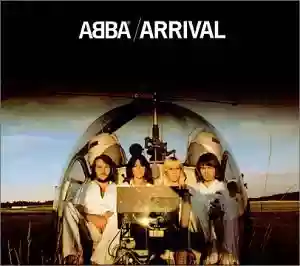
And in the midst of these years, in 1976, comes this album, "Arrival", which is not only the album that will reach the group's pinnacle in terms of sales and fame but is also the album of the group's utmost maturation: it opens with the pop ballad "When I Kissed the Teacher" (the voices of the 2 girls form a top-tier auditory spectacle); it is followed by the record-smashing hit, the beautiful "Dancing Queen"; track number 3 is the romantic slow "My Love, My Life", which breaks the pace before "Dum Dum Diddle", another pop ballad whose chorus I challenge you not to get into your head after a couple of listens. Next is the splendid "Knowing Me Knowing You", a melodic piece with a melodramatic flavor. The album closes with the famous "Money Money Money", one of the most famous disco music pieces (whose keyboard riff was taken as is by Madonna and "pasted" in "Hung Up": Ciccone declared it was a tribute to ABBA), and the bluesy rhythm track "Why Did It Have to Be Me". Later, the wonderful folk-pop ballad "Fernando" was included in the album, (another record-breaking hit), as a bonus track.
I highly recommend listening to this record, a true gem of '70s pop: listen and re-listen to it all in one breath.
Loading comments slowly
Summary by Bot
This review highlights ABBA as one of the most influential pop groups in music history, comparing their fame to The Beatles. Arrival, their 1976 album, is praised as their commercial and artistic peak featuring timeless hits like Dancing Queen and Money Money Money. The review emphasizes ABBA's innovative sound, pioneering music videos, and their lasting legacy in pop and disco genres, recommending Arrival as a must-listen record of the '70s.Tracklist Lyrics Videos
ABBA
ABBA are a Swedish pop group formed in Stockholm in 1972 by Agnetha Fältskog, Björn Ulvaeus, Benny Andersson and Anni‑Frid Lyngstad. They won the 1974 Eurovision Song Contest with Waterloo, became one of the world’s best‑selling music artists, and are known for immaculate harmonies and studio craft. They were inducted into the Rock and Roll Hall of Fame in 2010 and returned with new studio recordings on Voyage in 2021.15 Reviews
Other reviews
By Starblazer
Listening, savoring every single note of this record has the same rejuvenating effect as a cool shower after a hot, sticky day.
Thank you for the music, the songs you’re singin’, thanks for all the joy and the fun you bring me.
