
 •
Rating:
•
Rating:
THE REVIEW
THE DRUMS, THE DOUBLE BASS ETCETERA (1976) 6.5/10
Warning, handle with care.
“Anima latina” (which is a masterpiece, even though many intellectual critics despise it) bewildered the public, so the task of "winning back" those listeners who seemed disoriented by Battisti's shift of style appeared, from the very beginning, a daunting task. Already, however, the first echoes of so-called disco-music were reaching from across the ocean, to which Battisti lent his ear, mind, and heart. But, and I think this is quite clear, the Mogol-Battisti duo did not have enough songs ready to fill an album, and so (after discarding some preliminary attempts with Il Volo considered rather weak), they reclaimed a couple of tracks they had given to others: “Un uomo che ti ama”, recorded that same year by Bruno Lauzi (which didn't chart, unlike “Johnny Bassotto”) and the old-fashioned “La compagnia” recorded in 1969 by Marisa Sannia and, along with “Prigioniero del mondo”, the only track recorded by Battisti not written by himself.
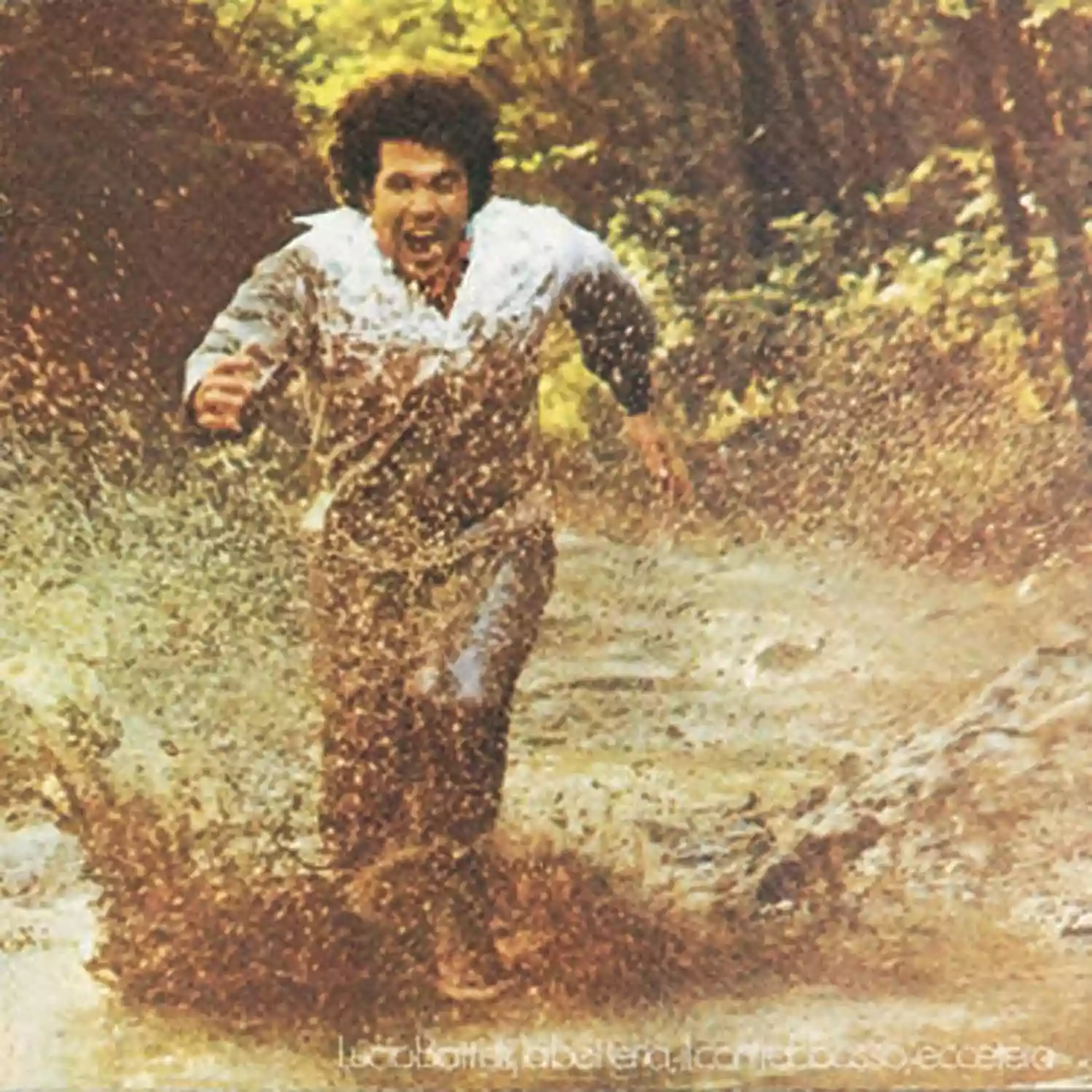
The highlight of the album is the opener “Ancora tu” (Battisti’s most successful single ever: number one on the hit parade for 3 months!) and it’s proof of how Battisti was “tuned in” to the new sound waves: it’s clearly a disco-music track with the first syncopated rhythmic effects (not by accident, Battisti spent quite a long time in California before recording the album) alternated with more classic instrumentation. The guitar is played by Ivan Graziani (who actively contributed to the album) and, for the first time, Battisti shot a promotional videoclip where he jumps, plays, runs—basically, he has fun splashing in the water (as the cover shows). The videoclip made for the emerging Tg2, in 1976 was never aired, and only surfaced in 1998 after the death of the Poggio Bustone singer-songwriter. Much to the dismay of Tg2, who were clearly already savoring the national scoop. And yes, because “La batteria, il contrabbasso eccetera” marked the triumphant return to the charts for our man (“Il nostro caro angelo”, a huge seller, was already from 1973, in other words, three years earlier) and the “reunion”—let’s say—of the Italian public with a more popular and “immediate” Battisti. Mission accomplished.
The other dance track is “Il veliero”. Now, this album is played amazingly (listening to it in the car, which is always the most effective, makes the musical quality of the 9 tracks crystal clear) and it has guitar and bass lines, especially bass, that should be studied in music schools (and well, you might say, but look who’s playing: Ivan Graziani; Walter Calloni; Alberto Radius; Bob Callero; Gianni Dall’Aglio, plus Battisti himself, playing a bit of everything, even mandolin) and it’s precisely on a bass line that our man builds a whole song, a wonderful one: “Io ti venderei”. As well as the remarkable “Respirando”: “latino-flavored” (so much so that Battisti himself recorded it in Spanish), more than a song, it seems like a film, with Mogol writing such a tangled text it becomes almost epic. In a nutshell: he dies; he sees her at the funeral; she gets with someone new but realizes it’s not the same; she dies (as he did: car accident); they meet again and see the others, always the same ones as before, at the funeral, but this time hers. The line “...Ti stai accorgendo/che un uomo vale un altro sempre no non vale...” deserves to be tattooed (yeah, good idea!). “La compagnia”, on the other hand, in Battisti’s version, becomes a relentless blues that would even fascinate a young Vasco Rossi (who, unfortunately, would cover it years later, in 2007): “...Ho imparato ad amare il pezzo quando ancora non facevo questo mestiere, l'ho sempre trovato commovente […] che non fosse stata scritta da Battisti l'ho scoperto solo in un secondo tempo. La cosa, però, non mi pare rilevante. Ora quella canzone è mia” (“Tv Sorrisi e Canzoni”, 2007). With all due respect, that song will always be Battisti’s, as far as I’m concerned.
Other things, however, only half work: “Un uomo che ti ama” I prefer in Lauzi’s version (my problem, I get it); “No dottore” has never really convinced me (although, I repeat, the musical performance is excellent); “Dove arriva quel cespuglio” is a very weak B-side. The following album “Io tu noi tutti” (1977), definitely more considered, is on a higher level; “Una donna per amico” even more so.
Loading comments slowly
Summary by Bot
The review provides a balanced perspective on Lucio Battisti's album 'La batteria, il contrabbasso, eccetera.' The reviewer rates the album with an average score, suggesting a mix of strengths and weaknesses. The tone remains neutral, giving factual insights without strong emotional leanings. Readers get a clear, concise evaluation of the album.Tracklist Lyrics Videos
02 De Nuevo Tu (00:00)
Lucio Battisti
Lucio Battisti (5 March 1943 – 9 September 1998) was an Italian singer-songwriter, composer and producer from Poggio Bustone. A central figure in Italian pop, he partnered with lyricist Mogol in the late 1960s–70s and later with Pasquale Panella for a radical electronic-leaning phase. He withdrew from public appearances around 1979–1980 and left a catalog spanning 1969–1994.102 Reviews
Other reviews
By cece65
"Songs are like punch cards to be inserted into a computer... If you make a mistake with the rhythm in the perforation, the card will be spat out by the machine and people will never hear either the music or the words."
"'Il veliero' is a piece that will prove to be way ahead of its time and goes far beyond the disco music atmospheres, even similar to certain '70s house atmospheres."
